
Introduction
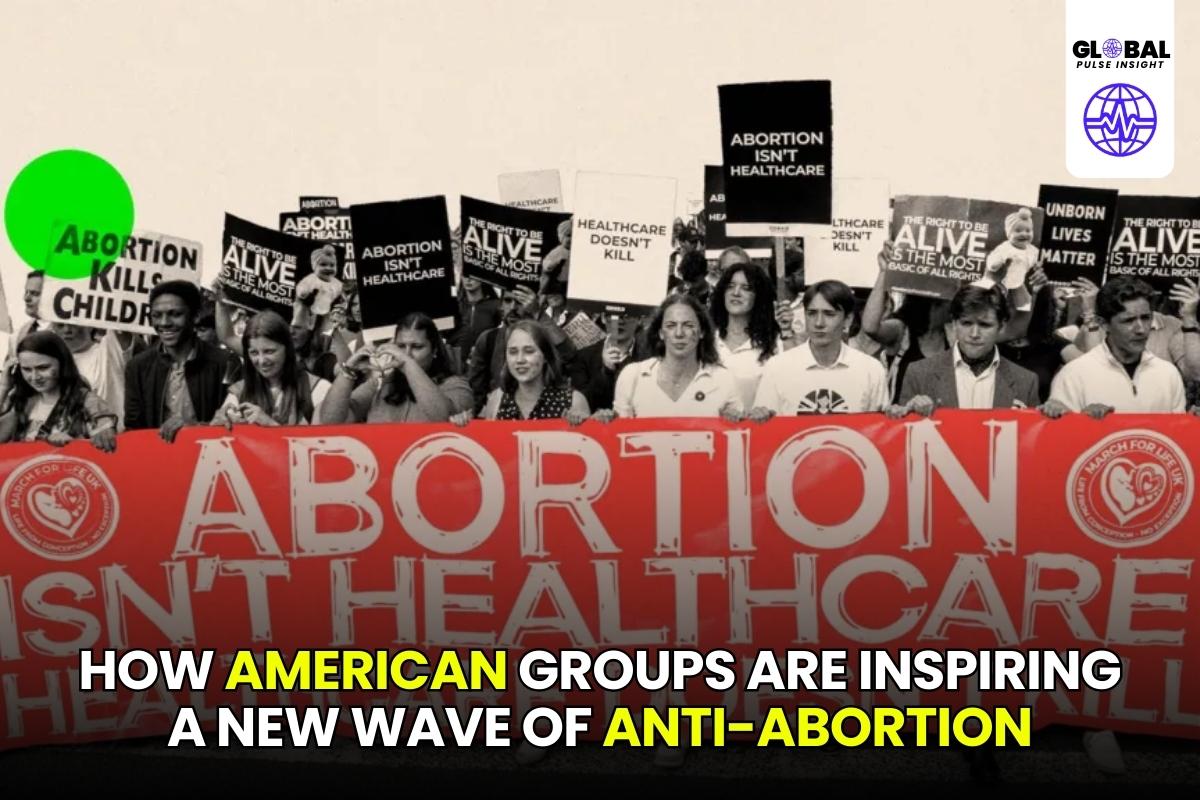
In recent years, the debate around abortion in the United Kingdom has taken on a new dimension. While the country has historically maintained broad public support for abortion rights, a growing number of young activists are beginning to organize around anti-abortion ideas. Observers say this development is influenced partly by political, cultural, and religious trends emerging from the United States.
American advocacy organizations, conservative political movements, and social media influencers are increasingly visible in British discussions about abortion. Their messaging, activism strategies, and funding networks have contributed to the rise of a more organized anti-abortion presence among certain youth groups and student organizations across the UK.
Although this movement remains relatively small compared with the broader pro-choice consensus in Britain, its emergence signals a shift in the nature of activism surrounding reproductive rights. Understanding the factors behind this change requires examining both the historical context of abortion in the UK and the evolving international networks shaping political debates.
Historical Background
Abortion law in the United Kingdom has been shaped by several key legislative milestones. The most significant change occurred with the passage of the Abortion Act 1967, which legalized abortion under specific circumstances in England, Scotland, and Wales. The law allowed termination of pregnancy when approved by two doctors and when certain medical or social conditions were met.
Initially, the legal limit for most abortions was set at 28 weeks of pregnancy. However, scientific advances and shifting societal attitudes led to further reform. In 1990, the Human Fertilisation and Embryology Act 1990 reduced the standard legal limit to 24 weeks.
Over the decades, abortion services in the UK have largely been integrated into the healthcare system and supported by public funding through the National Health Service (NHS). Public opinion surveys consistently show strong support for maintaining legal access to abortion.
Unlike the United States, where abortion rights have been deeply polarized in political debates for decades, the issue in Britain has generally remained less central in party politics. Major political parties rarely campaign on promises to restrict abortion, and legislative changes typically occur through parliamentary votes rather than ideological battles.
However, the global nature of modern activism-especially through digital media-has begun to reshape how debates unfold in Britain.
Key Developments
Several developments in recent years have contributed to renewed anti-abortion activism in the UK, particularly among younger audiences.
One notable factor is the presence of American advocacy organizations operating in Britain. Groups such as 40 Days for Life have expanded internationally, organizing demonstrations and prayer vigils outside abortion clinics during designated periods each year.
Another influential organization is Turning Point USA, which focuses on promoting conservative political views on university campuses. The group has established a British branch aimed at engaging students and young activists.
The organization was founded by American political activist Charlie Kirk, whose online videos and speeches have gained traction among some young British conservatives. Kirk’s activism-particularly his outspoken opposition to abortion-has inspired student-led initiatives and online discussions in the UK.
University campuses have become key arenas for these debates. Several universities have seen the creation of new pro-life societies, while others have witnessed protests against them. These developments reflect broader cultural tensions over free speech, religion, and reproductive rights.
Legal developments have also played a role in shaping the activism landscape. In recent years, the UK government introduced restrictions on demonstrations outside abortion clinics through the Public Order Act 2023. The law established buffer zones around clinics to prevent protesters from influencing individuals seeking abortion services.
Supporters of the restrictions argue they protect patient privacy and safety. Critics, including some religious organizations and advocacy groups, say the rules limit freedom of expression and religious practice.
Regional and Global Implications
The increasing involvement of American advocacy networks in the UK reflects a broader trend of transnational activism. Political movements are no longer confined to national borders, particularly when digital platforms allow messages to spread rapidly across countries.
The United States remains one of the most influential arenas for abortion politics. The 2022 decision by the Dobbs v. Jackson Women’s Health Organization overturned the federal constitutional protection for abortion that had existed since the landmark Roe v. Wade ruling.
That decision energized both pro-life and pro-choice movements around the world. For anti-abortion activists, the ruling demonstrated that long-term legal strategies could eventually reshape policy. For supporters of abortion rights, it served as a warning about the fragility of legal protections.
In Europe, however, the political and cultural context is different. Many countries-including the UK, France, and Germany-have maintained strong public support for abortion access. Nevertheless, debates about religious freedom, public protest, and reproductive rights continue to evolve.
International funding networks and advocacy campaigns mean that domestic policy discussions increasingly involve global actors. This interconnectedness may shape the future of reproductive rights debates across multiple regions.
Analysis: A Long-Term Strategy
The emergence of new anti-abortion activism in Britain does not necessarily signal an immediate political shift. Surveys consistently show that the majority of British citizens support legal access to abortion in most circumstances.
However, the strategy used by many advocacy groups focuses on long-term cultural influence rather than immediate legislative change. By building student networks, promoting online content, and organizing public campaigns, activists aim to gradually reshape public attitudes.
In the United States, anti-abortion organizations spent decades developing legal arguments, funding advocacy groups, and influencing judicial appointments before the Roe v. Wade precedent was overturned. Some observers believe similar long-term approaches are now being explored in other countries.
Digital platforms also play a crucial role in mobilizing younger audiences. Social media allows activists to reach large audiences quickly, share ideological narratives, and connect with like-minded individuals across national boundaries.
Looking ahead, the debate may increasingly revolve around issues beyond abortion itself, including freedom of speech, religious rights, and the limits of public protest. These framing strategies could help advocacy groups attract broader support even in societies where abortion rights remain widely accepted.
Data, Statistics, and Public Opinion
Public opinion data highlights the contrast between Britain and the United States on abortion policy.
A study conducted by the UK-based National Centre for Social Research found that approximately 86% of British adults believe abortion should be legal in all or most circumstances.
In comparison, polling in the United States typically shows around 60–65% support for legal abortion in similar categories.
Demographic differences also exist within the UK. Surveys indicate that younger men are somewhat less supportive of abortion rights than other groups, although a majority still favors legal access overall.
Financial data also suggests that advocacy activity is increasing. Reports from Amnesty International UK indicate that spending by anti-abortion organizations in Britain rose significantly between 2020 and 2023, reflecting growing organizational capacity.
However, pro-choice organizations and reproductive health providers continue to maintain strong institutional support and public backing.
Practical Insights: Why This Debate Matters
For readers and policymakers alike, the growing visibility of anti-abortion activism raises important questions about how social movements evolve in democratic societies.
First, it illustrates how political ideas increasingly circulate across borders. Activists, organizations, and funding sources operate within global networks, influencing debates far beyond their country of origin.
Second, it highlights the role of young people in shaping political discourse. Universities often serve as incubators for ideological movements, and student activism can influence national conversations over time.
Third, the debate reflects broader tensions between competing rights and values-such as freedom of expression, religious belief, and access to healthcare.
Understanding these dynamics is essential for anticipating how public policy debates may evolve in the coming years.
Faqs
1. Why are American anti-abortion groups becoming active in the UK?
American anti-abortion organizations are expanding internationally to promote their views and advocacy strategies. Because the UK shares language, media influence, and similar democratic institutions with the United States, it has become a natural place for these groups to establish partnerships, support campaigns, and influence public debates around abortion.
2. Which organizations are involved in anti-abortion activism in the UK?
Several groups are active in the movement, including international campaigns like 40 Days for Life and campus-based organizations such as Turning Point USA. These groups promote pro-life ideas through protests, student engagement, social media campaigns, and public discussions.
3. How does public opinion in the UK compare to the United States on abortion?
Public support for abortion rights is generally stronger in the UK. Surveys suggest that a large majority of British adults believe abortion should remain legal in most circumstances, whereas opinion in the United States is more politically divided.
4. What legal protections exist around abortion clinics in the UK?
The Public Order Act 2023 introduced “buffer zones” around abortion clinics in England and Wales. These zones restrict protests or actions that could influence individuals seeking abortion services within a specified distance from clinics.
5. Could anti-abortion activism significantly change abortion laws in the UK?
At present, major political parties in the UK broadly support legal access to abortion, and public opinion also favors maintaining these rights. While activism may influence debate and raise awareness, significant legal changes are unlikely in the near future without major shifts in public opinion or political priorities.
Conclusion
The emergence of a new generation of anti-abortion activists in the United Kingdom reflects the growing influence of international political networks and digital communication. American organizations, conservative commentators, and campus movements have helped introduce new strategies and narratives into the British debate.
Despite these developments, Britain remains a country where public support for abortion rights is strong and broadly reflected in political institutions. The anti-abortion movement is still relatively small, and significant legal or policy changes appear unlikely in the near term.
Nevertheless, the rise of youth-led activism and increased international engagement suggests that the conversation around reproductive rights may continue to evolve. As global political movements become more interconnected, debates that once seemed confined to a single country can increasingly influence discussions across borders.
In this context, the future of abortion policy in Britain will likely depend not only on domestic politics but also on the broader cultural and ideological currents shaping international activism.
Disclaimer:
This article provides analytical commentary based on publicly available information and does not represent official statements from any government or organization.