
Introduction
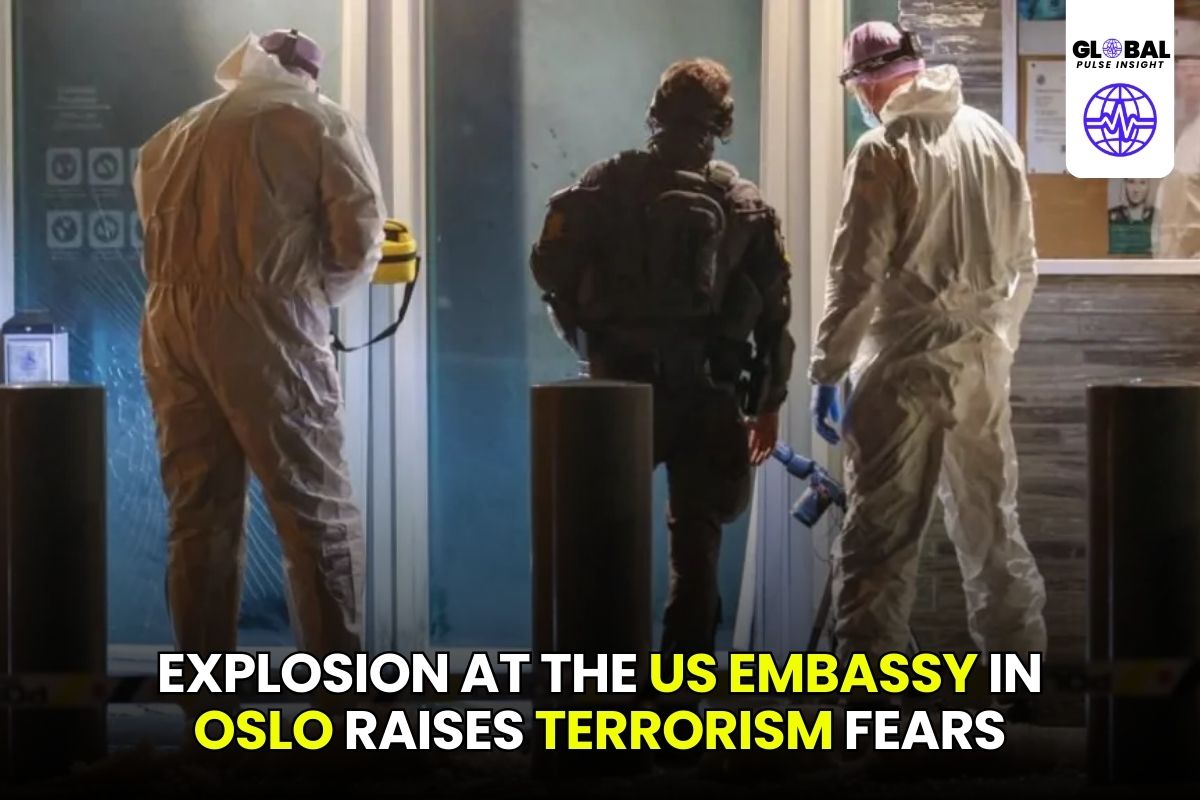
An overnight explosion near the US Embassy in Oslo has triggered a major investigation by Norwegian authorities and raised concerns about a potential security threat to diplomatic missions in Europe. The incident, which occurred during the early hours of Sunday, caused limited structural damage to the embassy building but fortunately resulted in no injuries.
Police in Oslo have stated that one possible explanation for the explosion is an act of terrorism, although investigators are also examining other potential causes. The blast occurred near the public entrance of the embassy facility, prompting emergency responders and security officials to secure the area and launch a detailed inquiry.
The event comes at a time when Western diplomatic missions worldwide face heightened security concerns due to geopolitical tensions and the growing risk of lone-actor attacks targeting symbolic institutions.
Historical Background: Security Risks Around Diplomatic Missions
Embassies and consulates have historically been high-profile targets for attacks due to their symbolic representation of a foreign government’s presence in another country. Diplomatic facilities often become focal points during periods of political tension, ideological conflict, or anti-Western sentiment.
Over the past several decades, attacks against embassies have occurred in various regions. One of the most notable incidents was the 1998 United States embassy bombings, which targeted American embassies in East Africa and resulted in hundreds of deaths. The attack dramatically reshaped global diplomatic security policies and led to significant upgrades in embassy protection.
In Europe, although security standards are generally high, diplomatic missions remain vulnerable to smaller-scale incidents such as vandalism, attempted attacks, or improvised explosive devices. Scandinavian countries like Norway are usually considered among the safest regions in the world. However, the possibility of isolated extremist acts cannot be ruled out.
Norway itself experienced a traumatic terrorist attack in 2011 Norway attacks, which profoundly changed the country’s approach to national security and emergency response. Since then, Norwegian authorities have maintained a strong focus on counter-terrorism preparedness.
Key Developments in the Oslo Embassy Explosion
The explosion occurred shortly after midnight local time, drawing the immediate attention of emergency services and security personnel. Norwegian police deployed multiple units to the area around the embassy to secure the site and conduct preliminary investigations.
Authorities confirmed that the blast caused relatively minor damage to the embassy building. Visible effects included shattered glass near the entrance area and marks on surrounding surfaces, suggesting that the explosion occurred at or near the public access point to the diplomatic compound.
Despite the damage, officials confirmed that no embassy staff or civilians were injured. This has led investigators to focus on determining whether the incident was a deliberate act intended primarily to send a political message rather than cause casualties.
Norwegian law enforcement agencies are working closely with diplomats and security officials from the United States Department of State to assess the situation and coordinate investigative efforts.
Police have also appealed to the public for information, asking anyone who may have witnessed suspicious activity in the area to come forward. Investigators are reviewing surveillance footage from nearby locations and conducting forensic analysis of materials found at the scene.
Officials have not yet identified suspects or confirmed the nature of the explosive device used in the incident.
Regional and Global Implications
Although the explosion did not cause casualties, it has broader implications for diplomatic security across Europe. The presence of a potential attack targeting a diplomatic facility raises concerns about the safety of embassies, consulates, and international institutions.
In recent years, Western diplomatic missions have increasingly faced threats related to global political tensions, extremist ideologies, and lone-actor violence. Even relatively small incidents can create ripple effects, prompting governments to reassess their security protocols.
For Norway, maintaining a reputation as a safe and stable country is important not only for national identity but also for its role as a diplomatic mediator in international conflicts. Oslo has long hosted peace negotiations and diplomatic talks between rival states and political factions.
An attack-real or suspected-on a foreign embassy within its territory could potentially lead to tighter security measures around diplomatic missions and international institutions.
Globally, the incident also reflects a broader trend in which symbolic targets are chosen to maximize psychological impact rather than physical destruction.
Analysis: What Happens Next?
From an analytical perspective, the most important question is whether the explosion was an isolated act or part of a broader pattern of security threats.
If investigators determine that the explosion was intentionally carried out by an individual or group, it could prompt several developments:
- Enhanced embassy security across Europe.
Governments may increase police presence around diplomatic compounds and review existing protection measures. - Greater intelligence cooperation.
Norway and the United States may deepen information sharing to identify potential threats. - Investigation into ideological motives.
Authorities will attempt to determine whether the incident was politically motivated, linked to extremist ideology, or simply an act of vandalism. - Public communication strategy.
Norwegian officials will likely focus on transparency to maintain public confidence in the country’s security environment.
Another possibility is that the blast was caused by non-terrorist factors such as accidental detonation of materials or a minor explosive device intended more for disruption than harm.
Until investigators release confirmed findings, authorities are expected to remain cautious in their public statements.
Data and Security Context
According to reports from European security agencies, the number of attempted attacks on diplomatic or government facilities in Europe has fluctuated over the past decade. Most incidents involve small-scale explosives, vandalism, or politically motivated demonstrations.
Diplomatic missions typically follow strict security guidelines outlined by international agreements such as the Vienna Convention on Diplomatic Relations, which obligates host countries to protect foreign embassies and diplomatic staff.
In practice, this means that host governments must ensure adequate security measures, including police patrols, surveillance systems, and controlled access to embassy compounds.
Norway generally ranks among the top countries in global safety indexes, with low levels of violent crime and strong institutional trust. This context makes the Oslo embassy incident particularly notable despite its relatively limited physical impact.
Practical Insights: Why This Incident Matters
For readers and observers of international affairs, the explosion highlights several broader issues that extend beyond the immediate event.
First, diplomatic facilities remain symbolic targets in global politics. Even minor incidents can influence diplomatic relations and security policies.
Second, the case demonstrates how modern investigations combine forensic analysis, surveillance technology, and public cooperation to identify potential threats.
Third, the event serves as a reminder that security challenges can arise even in countries widely perceived as stable and peaceful.
Finally, the incident illustrates the importance of strong international cooperation in protecting diplomatic institutions and maintaining trust between governments.
Faqs
1. What happened at the US Embassy in Oslo?
An explosion occurred near the public entrance of the United States Embassy in Oslo during the early hours of Sunday. The blast caused minor structural damage to the building, but authorities confirmed that no injuries were reported.
2. Is the Oslo embassy explosion being investigated as terrorism?
Yes, Norwegian police have stated that terrorism is one possible explanation for the explosion. However, investigators in Oslo are still examining multiple possibilities and have not yet confirmed the exact cause.
3. Were any people injured in the explosion?
No injuries were reported in the incident. Officials confirmed that embassy staff and nearby civilians were safe despite the damage caused by the blast
4. What actions have authorities taken after the explosion?
Norwegian police launched an investigation, secured the area, and began collecting forensic evidence. Authorities are also cooperating with the United States Department of State and reviewing surveillance footage to determine the cause of the explosion.
5. Why are diplomatic missions considered potential targets?
Embassies represent the presence of foreign governments and can sometimes become symbolic targets during political tensions or extremist activities. International law, including the Vienna Convention on Diplomatic Relations, requires host countries to ensure the protection and security of diplomatic facilities.
Conclusion
The explosion near the United States Embassy in Oslo has prompted a serious investigation by Norwegian authorities and raised questions about the potential for targeted attacks on diplomatic missions in Europe. While the blast caused only minor damage and no injuries, the possibility that it could be linked to terrorism has heightened concerns among security officials.
As investigators continue to examine evidence and analyze potential motives, the incident may lead to stronger security measures and closer cooperation between Norway and the United States.
Regardless of the final findings, the event underscores the ongoing importance of protecting diplomatic institutions and maintaining vigilance against emerging security threats in an increasingly complex global environment.
Disclaimer:
This article provides analytical commentary based on publicly available information and does not represent official statements from any government or organization.