
Introduction
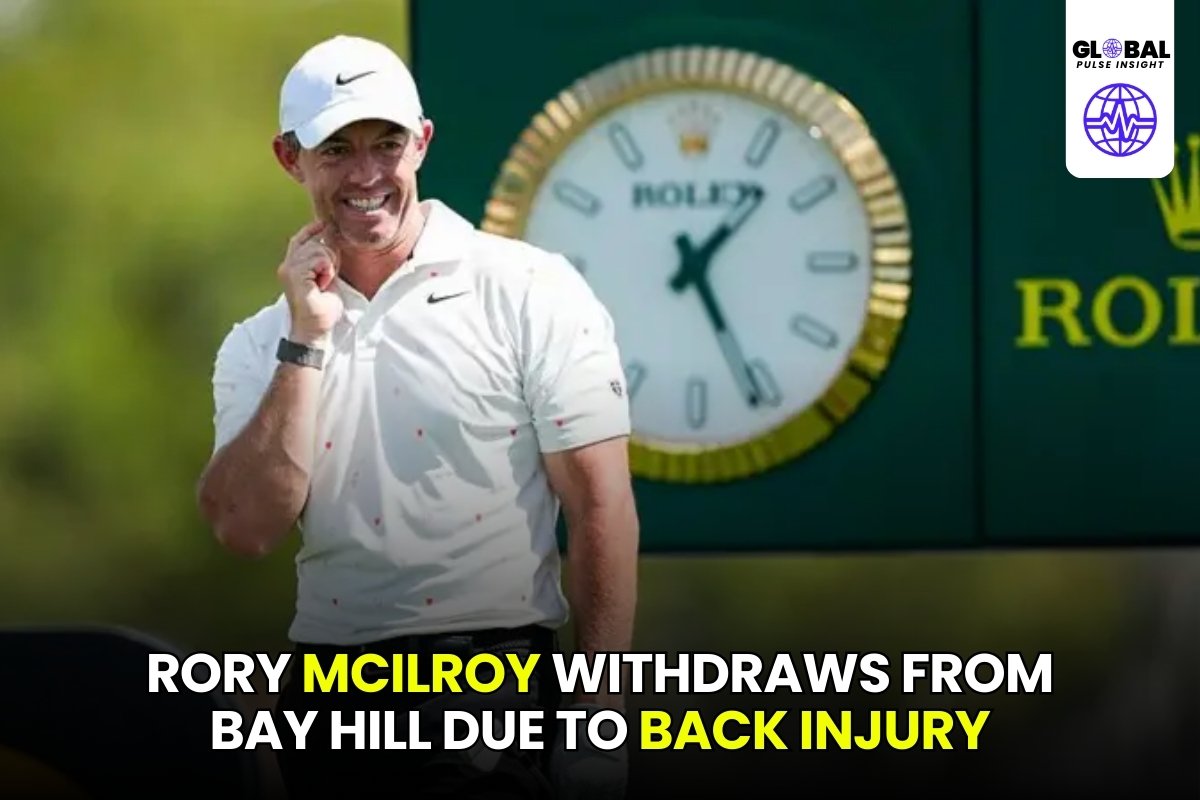
Rory McIlroy, one of the most accomplished golfers of his generation, faced a sudden setback at the Arnold Palmer Invitational in Orlando when he withdrew from the tournament due to lower back spasms. The Northern Ireland star, who was positioned within striking distance of the leaderboard, had been showing signs of a strong comeback after an even-par opening round followed by a second-round 68. McIlroy’s withdrawal, confirmed just 30 minutes before his third-round tee time, not only impacts the tournament dynamics at Bay Hill but also raises questions about athlete fitness, injury management, and preparation for upcoming major events, including the Masters and the Players Championship.
This article provides a detailed analysis of McIlroy’s withdrawal, its historical context, implications for professional golf, and broader lessons for athletes and sports enthusiasts.
Historical Background
Rory McIlroy’s career is marked by extraordinary achievements and resilience. Born in 1989 in Holywood, Northern Ireland, McIlroy rose to prominence as a teenage prodigy, quickly making a mark on both the European and PGA Tours. Over the years, he has won five major championships, including the US Open, The Open Championship, PGA Championship, and the Masters, achieving a career Grand Slam in 2022. His precise ball-striking, strategic approach, and mental toughness have distinguished him as one of golf’s elite players.
Despite his success, McIlroy has occasionally faced challenges with injuries, particularly in his back and wrists, which have at times affected his ability to compete consistently. Previous withdrawals include his 2013 exit at the Cognizant Classic due to injury. While these incidents are rare, they underscore the physical demands placed on professional golfers, whose repetitive swings and long tournament schedules can exacerbate even minor strains into serious injuries.
The Arnold Palmer Invitational at Bay Hill is traditionally one of the most prestigious events outside of the majors. McIlroy’s performances at Bay Hill have often been strong, with the course favoring controlled shot-making and strategic play-qualities that suit his style. However, as with many players, sustaining peak performance throughout a four-day tournament is contingent on physical fitness and injury prevention.
Key Developments
At the 2026 Arnold Palmer Invitational, McIlroy displayed early promise. His first-round even-par performance provided a solid foundation, while a second-round 68 elevated him to four under par, placing him tied for ninth on the leaderboard. Birdying four of the first seven holes on the back nine, McIlroy expressed satisfaction with his controlled and patient approach, indicating readiness to contend for the top positions.
However, during pre-round warm-ups for the third round, McIlroy experienced a twinge in his lower back that quickly developed into spasms. A PGA Tour official confirmed his withdrawal approximately 30 minutes before his scheduled tee time. In his official statement, McIlroy noted:
“While warming up in the gym this morning, I felt a small twinge in my back. As I started hitting balls on the range, it worsened into muscle spasms, making it impossible to continue.”
This withdrawal marks only the second time in his career that McIlroy has exited a PGA Tour event mid-competition. The first occurrence, at the Cognizant Classic in 2013, highlights how rare and significant such incidents are in the context of his otherwise consistent career.
With McIlroy out of the tournament, American Daniel Berger emerged as the leader at 13 under par after 15 holes of the third round, holding a two-shot advantage over Akshay Bhatia, while Sepp Straka, Cameron Young, and Collin Morikawa trailed at nine under. McIlroy’s absence reshapes the competitive landscape, influencing both betting odds and strategic dynamics among remaining contenders.
Regional and Global Implications
McIlroy’s withdrawal has implications beyond a single tournament. The PGA Tour, widely regarded as the world’s premier professional golf circuit, relies on top-ranked players like McIlroy to draw global attention, sponsorship, and broadcast viewership. His absence affects not only tournament narratives but also marketing and engagement metrics across North America, Europe, and Asia, where golf has a growing fan base.
From a broader perspective, McIlroy’s situation underscores the physical toll elite sports place on athletes. Lower back injuries are prevalent among golfers due to the repetitive torque and force generated during swings. Such incidents spark ongoing discussions about athlete health, workload management, and the importance of integrating physiotherapy and conditioning into professional routines.
Furthermore, McIlroy’s upcoming participation in the Masters and Players Championship will now be under additional scrutiny. Both events carry significant historical and commercial importance, and a fully fit McIlroy is essential for maintaining competitive integrity and fan engagement at these majors.
Analysis Section
Immediate Implications
McIlroy’s withdrawal presents several immediate questions for sports analysts:
- Tournament Impact: With one of the top-ranked competitors removed from contention, the leaderboard dynamics have shifted. Players like Daniel Berger, Akshay Bhatia, and Collin Morikawa now face less pressure from McIlroy’s presence, potentially altering strategic decisions in the final rounds.
- Athlete Health Management: The incident highlights the challenges of injury prevention in professional golf, emphasizing the importance of monitoring pre-round warm-ups, swing mechanics, and physical conditioning.
- Psychological Effects: Injuries not only affect physical performance but also mental confidence. McIlroy will need to balance recovery with the psychological demands of returning to elite competition quickly.
Longer-Term Analysis
Looking ahead, several predictions emerge:
- Recovery Timeline: Professional golfers often recover from lower back spasms within days to weeks if managed with rest, therapy, and strength exercises. Assuming proper treatment, McIlroy is likely to be fit for the Players Championship and potentially the Masters.
- Strategic Adaptations: McIlroy’s team may adjust training routines to reduce spinal stress, incorporating low-impact conditioning and preventive care to minimize recurrence risk.
- Competition Implications: Other players may view McIlroy’s absence as an opportunity to consolidate positions, which could influence rankings and tour momentum through the early 2026 season.
Data, Statistics, and Figures
Relevant publicly available statistics further contextualize McIlroy’s withdrawal:
- Career Majors: 5 (US Open, PGA Championship, The Open Championship, Masters)
- Career Grand Slam Achieved: 2022
- Official World Golf Ranking: Consistently within top 5 in 2025–2026
- Previous Withdrawals: 2 PGA Tour events (Cognizant Classic 2013, Bay Hill 2026)
- Recent Form at Bay Hill: Tied for 9th after two rounds in 2026, with scores of 72 and 68
This data highlights McIlroy’s elite status while illustrating how rare mid-tournament withdrawals are in his career.
Practical Insights
McIlroy’s situation offers valuable lessons for professional athletes and casual sports enthusiasts alike:
- Injury Awareness: Even elite performers are vulnerable to sudden injuries; prevention and early detection are critical.
- Workload Management: Balancing competitive play with training, travel, and recovery is essential to sustaining peak performance.
- Mental Resilience: Handling unexpected setbacks, such as mid-tournament withdrawals, is as important as technical skill.
- Fan Engagement: Understanding the human aspect of sport deepens appreciation for the dedication and risks professional athletes face.
These insights remain evergreen, applicable to aspiring golfers, fitness professionals, and anyone seeking to optimize physical performance under pressure.
Conclusion
Rory McIlroy’s withdrawal from the Arnold Palmer Invitational at Bay Hill serves as a critical reminder of the physical demands of professional golf. While the Northern Ireland star had been in promising form, muscle spasms in his lower back forced an early exit, impacting both the tournament and his preparation for upcoming majors.
Historically, McIlroy has managed injuries with care and maintained a high level of performance. This incident highlights the ongoing challenges athletes face in balancing competition with health management. Strategically, his absence reshapes the leaderboard, provides opportunities for competitors, and emphasizes the importance of injury prevention in elite sport.
For fans and analysts, the situation underscores the unpredictability of professional sports and the resilience required to compete at the highest level. McIlroy’s recovery, adaptation, and return to form will be closely watched, offering insights into the delicate balance between athletic excellence and physical well-being.
Disclaimer:
This article provides analytical commentary based on publicly available information and does not represent official statements from any government or organization.