
Introduction
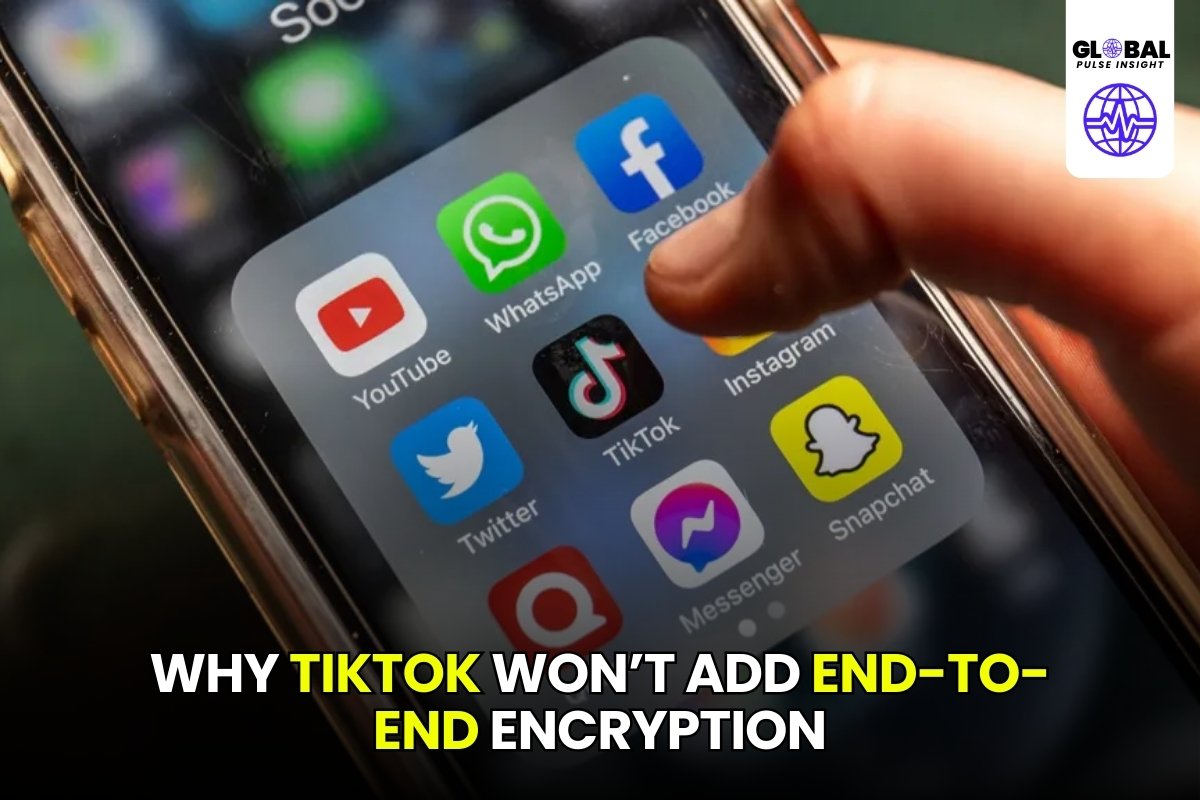
In an era where digital privacy has become a defining concern of online communication, most major platforms have moved toward stronger encryption to protect user data. Yet TikTok has taken a notably different path. The company has decided not to implement end-to-end encryption (E2EE) for private messages, arguing that such a move could compromise user safety rather than enhance it.
This decision places TikTok at the center of a broader global debate: should technology companies prioritize absolute privacy, or should they retain some level of oversight to prevent harm? The answer has far-reaching implications-not only for users, but also for regulators, law enforcement, and the future of digital governance.
Historical Background
End-to-end encryption has evolved into a cornerstone of modern digital security. It ensures that only the sender and recipient can access the contents of a message, preventing interception by hackers, corporations, or even governments.
Over the past decade, several major platforms have adopted E2EE as a default or optional feature. Messaging services like WhatsApp and Signal have built their reputations around strong encryption, while companies such as Meta have gradually expanded its use across Facebook Messenger and Instagram.
However, the rise of encryption has also sparked concerns. Governments and child protection organizations have warned that encrypted environments can create “blind spots,” where illegal or harmful activities-such as exploitation, harassment, or extremism-can occur without detection.
TikTok’s decision must be viewed in this context, where privacy and safety are increasingly seen as competing priorities rather than complementary goals.
Key Developments
TikTok has confirmed that it will not implement end-to-end encryption for its direct messaging system. Instead, the platform will continue using standard encryption methods that protect data while still allowing limited oversight in specific situations.
According to the company, adopting E2EE would prevent its internal safety teams and law enforcement agencies from accessing messages-even when investigating serious concerns such as abuse or criminal activity. TikTok argues that this limitation could increase risks, particularly for younger users who make up a significant portion of its global audience.
The platform, owned by ByteDance, has emphasized that its approach is designed to balance privacy with proactive safety measures. It maintains that only authorized personnel can access messages, and only under strict conditions, such as user reports or valid legal requests.
This stance sets TikTok apart from competitors. While many platforms emphasize maximum privacy through encryption, TikTok is positioning itself as prioritizing user protection-even if it means diverging from industry trends.
Regional and Global Implications
TikTok’s decision has implications that extend well beyond its own platform.
1. Redefining Privacy Standards
By rejecting E2EE, TikTok challenges the prevailing assumption that stronger encryption is always the optimal solution. This could influence how other platforms and policymakers think about privacy, particularly in contexts involving vulnerable users.
2. Regulatory Dynamics
Governments around the world are increasingly scrutinizing big tech companies. In regions like Europe and the United States, lawmakers have debated whether platforms should retain the ability to monitor harmful content. TikTok’s approach may align more closely with regulatory expectations in some jurisdictions, potentially easing political pressure.
3. Geopolitical Considerations
TikTok’s ownership by ByteDance has long raised concerns about data security and potential foreign influence. Its decision to avoid E2EE may be interpreted in different ways: as a commitment to safety, or as a sign of increased control over user data. This dual perception could shape how different countries approach regulation of the platform.
4. Industry Divergence
The move highlights a growing divide within the tech industry. While some companies advocate for “privacy-first” models, others are exploring hybrid approaches that incorporate both security and oversight. This divergence may define the next phase of digital platform development.
Analysis: Safety vs Privacy-A Strategic Trade-Off
At its core, TikTok’s decision reflects a strategic trade-off between two competing priorities.
The Case for Privacy
Advocates of end-to-end encryption argue that it is essential for protecting user rights in an increasingly surveilled digital world. Without E2EE, users may be vulnerable to data breaches, unauthorized access, or misuse of personal information.
The Case for Safety
On the other hand, TikTok’s position highlights the risks associated with fully encrypted systems. If platforms cannot access message content, it becomes significantly harder to detect and prevent harmful behavior. This is particularly relevant for platforms with large youth audiences.
A Middle-Ground Approach?
TikTok appears to be pursuing a middle-ground strategy-offering encryption strong enough to protect data from external threats, while retaining the ability to intervene in cases of abuse. Whether this model proves effective remains to be seen.
What Happens Next?
Looking ahead, several trends are likely:
- Increased Regulation: Governments may push for frameworks that balance privacy with safety, potentially setting new industry standards.
- Technological Innovation: Companies may develop new tools that allow content monitoring without fully compromising encryption.
- User Awareness: As debates around privacy intensify, users may become more selective about which platforms they trust.
TikTok’s decision could serve as a test case for these evolving dynamics.
Data, Statistics, and Figures
- TikTok has over 1 billion global users, making it one of the largest social media platforms worldwide.
- In the United Kingdom alone, the platform reports around 30 million monthly users, many of whom are under the age of 30.
- Studies suggest that over 80% of major messaging platforms now use some form of end-to-end encryption.
- Reports from child protection organizations indicate a decline in detectable abuse cases on platforms that have fully implemented E2EE, raising concerns about hidden risks.
These figures highlight the scale of the challenge: balancing security, privacy, and safety for a massive and diverse user base.
Practical Insights: Why This Matters
For everyday users, TikTok’s decision has several practical implications:
- Safety for Younger Users: Parents and guardians may view the lack of E2EE as a safeguard against harmful interactions.
- Privacy Trade-Offs: Users should understand that while their data is protected, it may still be accessible under certain conditions.
- Platform Choice: Individuals increasingly need to choose platforms based on their personal
priorities-whether that’s maximum privacy or enhanced safety features.
For businesses and policymakers, the decision underscores the importance of transparency and trust in digital ecosystems.
FAQs
1. Why is TikTok not using end-to-end encryption (E2EE)?
TikTok believes that full encryption would limit its ability to detect harmful content, such as abuse or illegal activity, making the platform less safe—especially for younger users.
2. What is end-to-end encryption and why is it important?
End-to-end encryption ensures that only the sender and receiver can read messages. It is widely used by platforms like WhatsApp and Signal to protect user privacy from hackers, companies, and governments.
3. Does TikTok still protect user messages without E2EE?
Yes, TikTok uses standard encryption to secure messages. However, unlike E2EE platforms, it can access messages in limited situations, such as investigating reports of harmful behavior or responding to legal requests.
4. How does TikTok’s approach affect user privacy?
While messages are still protected from external threats, TikTok’s system allows some internal access when necessary. This creates a balance between privacy and safety, but it may not offer the same level of privacy as fully encrypted platforms.
5. Could TikTok change its stance on encryption in the future?
It is possible. As regulations evolve and user expectations shift, TikTok may revisit its decision. However, for now, the company appears committed to prioritizing user safety over implementing full end-to-end encryption.
Conclusion
TikTok’s refusal to adopt end-to-end encryption for private messages marks a significant departure from prevailing industry trends. By prioritizing safety over absolute privacy, the platform has positioned itself at the center of a complex and evolving debate.
The decision reflects broader tensions in the digital age: how to protect users without compromising their rights, and how to regulate technology without stifling innovation. As governments, companies, and users navigate these challenges, TikTok’s approach may serve as a critical reference point for the future of online communication.
Ultimately, the question is not simply whether encryption is good or bad—but how it should be implemented in a way that serves both individual freedoms and collective security.
Disclaimer:
This article provides analytical commentary based on publicly available information and does not represent official statements from any government or organization.