Introduction
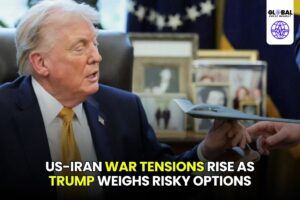
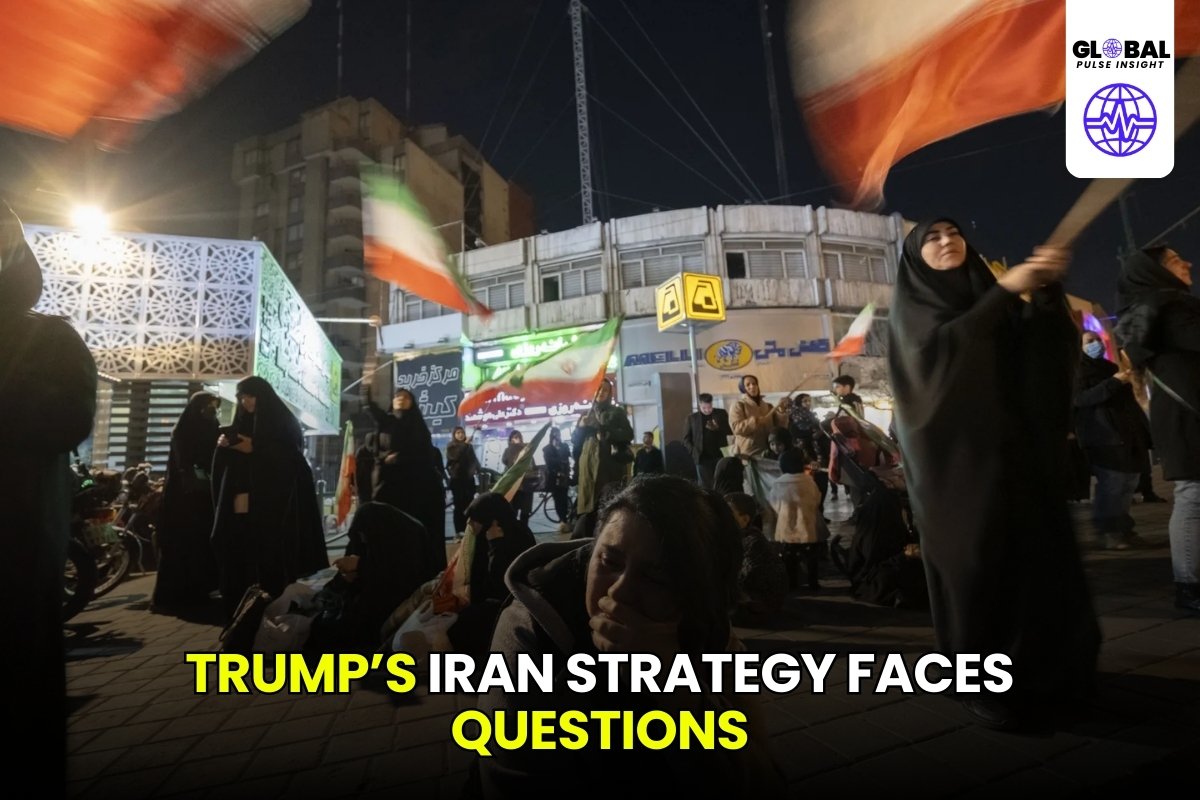
The latest U.S. military strikes on Iran have triggered a wave of global concern-not only because of their scale, but also due to the lack of clarity surrounding Washington’s long-term objectives. While Donald Trump has framed the operation as essential for national and regional security, his administration has delivered inconsistent messages about what success actually looks like.
Is the goal limited to dismantling Iran’s military capabilities? Or does it extend to reshaping Iran’s political system? The absence of a clear endgame has left policymakers, analysts, and global stakeholders grappling with uncertainty at a critical geopolitical moment.
Historical Background
Tensions between the United States and Iran have deep roots, stretching back to the 1979 Iranian Revolution, which replaced a pro-Western monarchy with an Islamic Republic led by clerical authority. Since then, relations have been defined by mutual distrust, economic sanctions, and periodic military confrontations.
Iran’s nuclear ambitions have been a central flashpoint. The 2015 Joint Comprehensive Plan of Action (JCPOA), negotiated under Barack Obama, aimed to curb Iran’s nuclear program in exchange for sanctions relief. However, the U.S. withdrawal from the agreement in 2018 under Trump reignited tensions, leading to a cycle of sanctions, proxy conflicts, and regional instability.
The Middle East has also witnessed a pattern of U.S. military interventions, notably during the presidencies of George W. Bush, whose wars in Iraq and Afghanistan reshaped regional geopolitics but also exposed the limits of military power in achieving political transformation.
Against this backdrop, the current escalation is not an isolated event-it is part of a broader, decades-long struggle over influence, security, and ideology in the region.
Key Developments
The recent U.S. operation against Iran represents the largest American military engagement in the Middle East in over two decades. Initially described as a targeted effort to neutralize Iran’s nuclear capabilities, the mission’s scope has since appeared to expand.
President Trump has outlined multiple objectives, including:
- Disrupting Iran’s ballistic missile systems
- Weakening its naval forces
- Limiting support for regional proxy groups
- Preventing nuclear weapon development
At the same time, his rhetoric has occasionally hinted at regime change, particularly in comments encouraging Iranians to “take back” their government-an implicit challenge to Supreme Leader Ali Khamenei.
However, senior officials have not consistently echoed this stance. Defense Secretary Pete Hegseth has emphasized that the operation is not designed to overthrow Iran’s leadership, while Secretary of State Marco Rubio framed the strikes as a preemptive move to prevent greater casualties following anticipated regional escalation.
Meanwhile, U.S. military leaders have warned that achieving these goals will be complex and potentially prolonged. Early retaliatory strikes by Iran have already resulted in casualties and targeted U.S. allies across the region, signaling that the conflict may not remain limited in scope.
Regional and Global Implications
The uncertainty surrounding U.S. objectives has significant implications for both the Middle East and the broader international system.
1. Middle East Stability
Iran plays a central role in regional geopolitics through its network of alliances and proxy groups. Any sustained military campaign against Tehran risks triggering wider conflict involving countries such as Saudi Arabia, Israel, and Gulf states. Escalation could disrupt already fragile security balances and intensify sectarian tensions.
2. Global Energy Markets
The Middle East remains a critical hub for global oil supply. Even limited disruptions in the region can lead to sharp increases in oil prices, affecting economies worldwide. The Strait of Hormuz, through which a significant portion of global oil shipments pass, could become a flashpoint if tensions escalate further.
3. U.S. Alliances and Credibility
Mixed messaging from Washington may create uncertainty among allies. Countries relying on U.S. security guarantees may question the consistency of American foreign policy, while adversaries could interpret ambiguity as either strategic flexibility or lack of direction.
4. Risk of Prolonged Conflict
History suggests that limited military operations can evolve into long-term engagements. The wars in Iraq and Afghanistan demonstrate how initial objectives can expand, leading to extended commitments with high financial and human costs.
Analysis: Strategic Ambiguity or Lack of Clarity?
From an analytical perspective, the current situation raises a key question: is the ambiguity in U.S. messaging deliberate or indicative of internal disagreement?
On one hand, strategic ambiguity can be useful. By keeping adversaries uncertain, policymakers can retain flexibility and avoid committing to rigid plans. This approach can complicate Iran’s response and create diplomatic leverage.
On the other hand, inconsistent messaging carries risks:
- It may weaken deterrence if adversaries perceive indecision
- It can undermine domestic support for the operation
- It complicates coordination with allies
The divergence between Trump’s statements and those of his senior officials suggests a lack of unified strategic communication. This disconnect could hinder the effectiveness of the overall campaign.
What Happens Next?
Several possible scenarios may unfold:
- Limited Military Success
The U.S. achieves its immediate objectives-damaging Iran’s military capabilities-without escalating into a broader war. This would allow Washington to declare victory while avoiding long-term involvement. - Prolonged Air Campaign
Continued strikes could weaken Iran over time but risk retaliation and regional spillover, leading to sustained instability. - Escalation into Wider Conflict
If Iran intensifies its response or if regional actors become directly involved, the conflict could expand significantly. - Diplomatic Re-engagement
Military pressure might eventually push both sides back toward negotiations, potentially reviving discussions around nuclear restrictions and regional security arrangements.
Data, Statistics, and Figures
- The Middle East accounts for approximately 30% of global oil production, highlighting the economic stakes of regional instability.
- The Strait of Hormuz handles roughly 20% of the world’s oil shipments, making it one of the most strategically important chokepoints.
- Previous U.S. conflicts in Iraq and Afghanistan cost over $2 trillion combined, illustrating the financial risks of prolonged military engagement.
- Iran is estimated to have hundreds of ballistic missiles, forming a key pillar of its deterrence strategy.
These figures underscore the scale and complexity of any military confrontation involving Iran.
Practical Insights: Why This Matters
For global audiences, the implications extend beyond geopolitics:
- Economic Impact: Rising oil prices can lead to higher transportation and living costs worldwide.
- Security Concerns: Regional instability can increase the risk of terrorism and disrupt international trade routes.
- Policy Lessons: The situation highlights the importance of clear communication and defined objectives in foreign policy.
For businesses, investors, and policymakers, understanding these dynamics is essential for navigating uncertainty in global markets.
FAQs
1. What are the main objectives of Donald Trump in the Iran conflict?
The stated objectives include weakening Iran’s nuclear program, reducing its missile capabilities, limiting its regional influence, and protecting U.S. allies. However, mixed messaging has made it unclear whether regime change is also an intended outcome.
2. Is the United States seeking regime change in Iran?
Officially, U.S. defense leadership has denied that regime change is the primary goal. However, some statements by Trump-especially those encouraging Iranians to challenge leadership under Ali Khamenei-have led analysts to believe it remains a possible, though unofficial, objective.
3. How could this conflict affect global oil prices?
Any escalation in the Middle East, especially involving Iran, can disrupt oil supply routes like the Strait of Hormuz. This often leads to increased oil prices, which can impact global inflation, transportation costs, and economic stability.
4. Could this situation turn into a long-term war?
Yes, there is a risk. Past U.S. military interventions in the region have evolved into prolonged conflicts. If objectives remain unclear and tensions escalate, this operation could expand beyond its initial scope.
5. What are the possible next steps in the conflict?
The situation could move in several directions, including continued airstrikes, broader regional escalation, or a return to diplomatic negotiations. The outcome will largely depend on military developments and political decisions in both Washington and Tehran.
Conclusion
The current U.S. military operation against Iran reflects both the urgency and complexity of modern geopolitical conflicts. While the stated objectives include neutralizing military threats and protecting allies, the absence of a clearly articulated endgame raises critical questions about the long-term strategy.
Mixed messaging from the Trump administration has created uncertainty at a time when clarity is essential. Whether this ambiguity is intentional or a sign of internal divisions remains unclear. What is certain, however, is that the stakes are high—not just for the United States and Iran, but for the stability of the entire Middle East and the global economy.
As the situation evolves, the key determinant of success will not only be military effectiveness but also the ability to translate tactical gains into a sustainable political outcome.
Disclaimer:
This article provides analytical commentary based on publicly available information and does not represent official statements from any government or organization.