
Introduction
The war in Ukraine has become one of the most technologically advanced conflicts of the 21st century. Since the beginning of the Russian invasion of Ukraine, both Russia and Ukraine have relied heavily on unmanned systems to gain tactical advantages on the battlefield. Initially, much of the attention focused on aerial drones and maritime drones. However, a new dimension of warfare is rapidly emerging: armed ground robots.
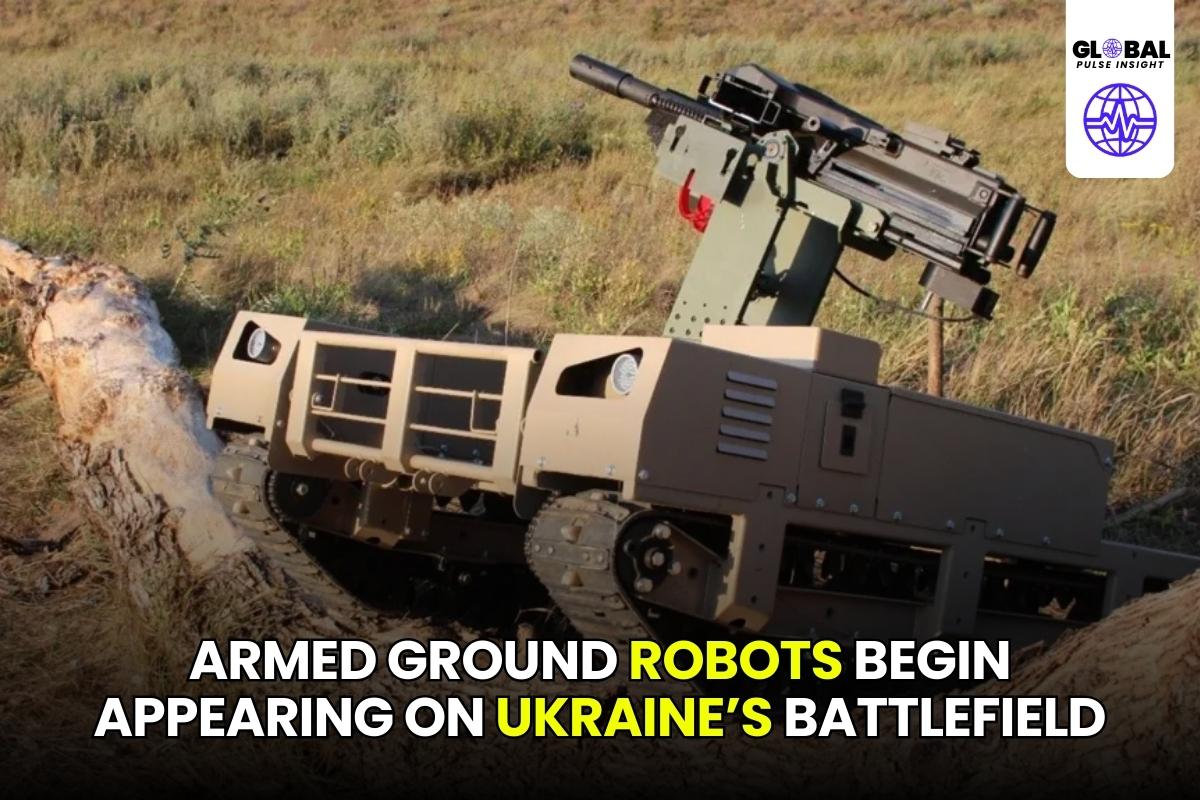
Uncrewed Ground Vehicles (UGVs) are now increasingly being deployed by Ukrainian forces for a variety of tasks ranging from logistics and reconnaissance to direct combat. These robotic systems are capable of navigating dangerous terrain, carrying weapons, and supporting troops without putting human soldiers at immediate risk. As the war evolves, the use of ground robots signals a broader shift toward automation and artificial intelligence in military operations.
The emergence of these machines raises important questions about the future of warfare, military strategy, and the ethical limits of autonomous weapons. The battlefield in Ukraine is gradually becoming a testing ground for technologies that may shape conflicts around the world in the decades ahead.
Historical Background
The concept of robotic warfare is not entirely new. Militaries have experimented with unmanned systems for decades. During the early 2000s, the United States used ground robots primarily for bomb disposal in conflicts such as the wars in Iraq and Afghanistan. These early systems were designed mainly for defensive purposes, helping soldiers detect explosives and navigate hazardous areas.
Over time, advances in artificial intelligence, sensors, and communication technologies allowed military engineers to expand the capabilities of robotic systems. Drones became widely used for surveillance and targeted strikes. Meanwhile, ground robots evolved from simple remote-controlled machines into more sophisticated platforms capable of semi-autonomous movement and advanced target detection.
The Ukraine war has accelerated this trend dramatically. Facing a much larger military force, Ukraine has relied on innovation and technological adaptation to compensate for limited manpower and resources. This strategy has already proven effective with aerial drones and maritime drone attacks in the Black Sea.
Now, the introduction of armed ground robots represents another stage in the rapid technological transformation of modern warfare.
Key Developments
In recent months, Ukrainian forces have significantly expanded the deployment of Uncrewed Ground Vehicles across various frontlines. These robotic platforms are being used for a wide range of missions.
Some UGVs are equipped with machine guns or grenade launchers and can provide fire support during combat operations. Others carry explosives and function as kamikaze systems designed to destroy enemy positions or vehicles.
Military personnel have also used robotic vehicles for ambush operations and defensive missions. In certain cases, ground robots have reportedly held defensive positions for extended periods or launched surprise attacks on enemy armored vehicles.
Despite their growing capabilities, most ground robots currently remain under human control. Operators guide the machines remotely from secure locations using communication links. Although the robots can navigate terrain and identify potential targets using sensors, the final decision to open fire is typically made by a human operator.
This limitation reflects ongoing concerns about ethics and international humanitarian law. Fully autonomous lethal systems raise complex questions about accountability, target identification, and the risk of civilian casualties.
In addition to combat roles, many UGVs are still used for logistical purposes. They transport ammunition, deliver supplies to frontline troops, and evacuate wounded soldiers from dangerous areas. These functions significantly reduce the risk faced by human personnel operating in exposed combat zones.
Regional and Global Implications
The emergence of armed ground robots in Ukraine has implications that extend far beyond the battlefield. Military strategists around the world are closely observing how these technologies perform in real combat conditions.
For countries facing security challenges, robotic systems offer several advantages. They reduce the need for large numbers of soldiers, limit casualties, and allow operations in environments that would otherwise be too dangerous for human forces.
This trend could accelerate a global arms race in autonomous military technology. Major powers such as United States, China, and Russia are already investing heavily in artificial intelligence-driven defense systems.
Another important implication is the changing nature of battlefield strategy. Traditional warfare relied heavily on large formations of soldiers and armored vehicles. In contrast, modern conflicts may increasingly feature smaller units supported by networks of drones, robots, and AI-driven surveillance systems.
The Ukraine conflict is demonstrating how these technologies can reshape the balance between manpower and technological capability.
Analysis: The Future of Robotic Warfare
The growing use of robotic systems in Ukraine suggests that the next generation of warfare will involve a hybrid model where humans and machines operate together on the battlefield.
Ground robots are unlikely to completely replace soldiers in the near future. Infantry remains essential for tasks such as securing territory, interacting with civilians, and making complex battlefield decisions. However, robots can dramatically expand the capabilities of military units.
One major advantage is risk reduction. Robots can perform dangerous missions such as scouting enemy positions, clearing minefields, or attacking fortified locations without exposing soldiers to direct harm.
Another factor driving this shift is manpower shortages. Ukraine, like many countries engaged in prolonged conflict, faces difficulties in replacing experienced soldiers. Robotic systems provide a way to maintain operational strength even when troop numbers are limited.
Looking ahead, the integration of artificial intelligence may further enhance the autonomy of these machines. Future robots could navigate independently, coordinate with aerial drones, and execute complex missions with minimal human supervision.
However, such developments also raise ethical and legal concerns. International organizations and policymakers are already debating regulations governing autonomous weapons. Ensuring human oversight will likely remain a central issue in these discussions.
Data, Statistics, and Technological Trends
Several indicators highlight the rapid growth of robotic warfare technology:
- Ukraine’s defense sector has dramatically expanded drone and robot production since 2022.
- Some Ukrainian manufacturers reportedly produced thousands of ground robots in 2025, with expectations of tens of thousands in the coming years.
- The global military robotics market is projected to exceed $30 billion by the early 2030s, according to defense industry estimates.
At the same time, battlefield conditions have changed significantly. Surveillance drones now monitor large areas near the front line, creating what military analysts describe as extended “kill zones” where troop movement is easily detected.
In such an environment, unmanned ground vehicles can operate where human soldiers might face immediate danger.
Practical Insights: Why This Matters
The emergence of robotic warfare in Ukraine highlights a broader shift in how military power is defined. Technological innovation is becoming as important as traditional factors such as troop numbers and heavy equipment.
For policymakers and defense planners, this transformation requires new approaches to strategy, training, and procurement. Militaries must learn how to integrate robotic systems into existing structures while maintaining human oversight and accountability.
For civilians and global audiences, the story also illustrates how rapidly technology can reshape real-world conflicts. What once seemed like science fiction-robots fighting alongside humans-is now a reality in active war zones.
Understanding these developments is essential because the technologies tested in Ukraine may eventually influence military doctrines around the world.
Faqs
1. What are armed ground robots used for in the Ukraine war?
Armed ground robots, also known as Uncrewed Ground Vehicles (UGVs), are used for reconnaissance, transporting supplies, evacuating wounded soldiers, and carrying weapons such as machine guns or grenade launchers to attack enemy positions while keeping human troops out of direct danger.
2. Are ground robots in Ukraine fully autonomous?
Most ground robots used on the battlefield are not fully autonomous. While they can navigate terrain and detect targets using sensors, the final decision to fire weapons is typically made by a human operator controlling the robot remotely.
3. Why is Ukraine investing heavily in robotic warfare technology?
Ukraine is expanding its use of robotic systems to reduce battlefield casualties and compensate for manpower shortages. Robots can perform high-risk missions such as scouting enemy positions or attacking fortified areas without risking soldiers’ lives.
4. Are other countries developing similar military robots?
Yes. Countries such as United States, China, and Russia are investing heavily in autonomous military technologies, including robotic vehicles, AI-powered drones, and automated defense systems.
5. Could robotic warfare become common in future conflicts?
Military experts believe robotic systems will play an increasingly important role in future wars. Advances in artificial intelligence, sensors, and automation may lead to coordinated operations involving aerial drones, naval drones, and ground robots working together on the battlefield.
Conclusion
The appearance of armed ground robots on Ukraine’s battlefield represents a significant milestone in the evolution of modern warfare. As the conflict continues, unmanned systems are playing an increasingly important role in reconnaissance, logistics, and direct combat.
While human soldiers remain central to military operations, robotic technologies are expanding the capabilities of armed forces and changing the nature of battlefield strategy. The war in Ukraine is demonstrating how automation, artificial intelligence, and robotics can shape conflicts in the 21st century.
In the coming years, these technologies are likely to become more advanced, more autonomous, and more widely used by militaries around the world. The challenge for policymakers will be to balance the strategic advantages of robotics with the ethical responsibilities that come with deploying machines capable of lethal force.
Disclaimer:
This article provides analytical commentary based on publicly available information and does not represent official statements from any government or organization.