Introduction
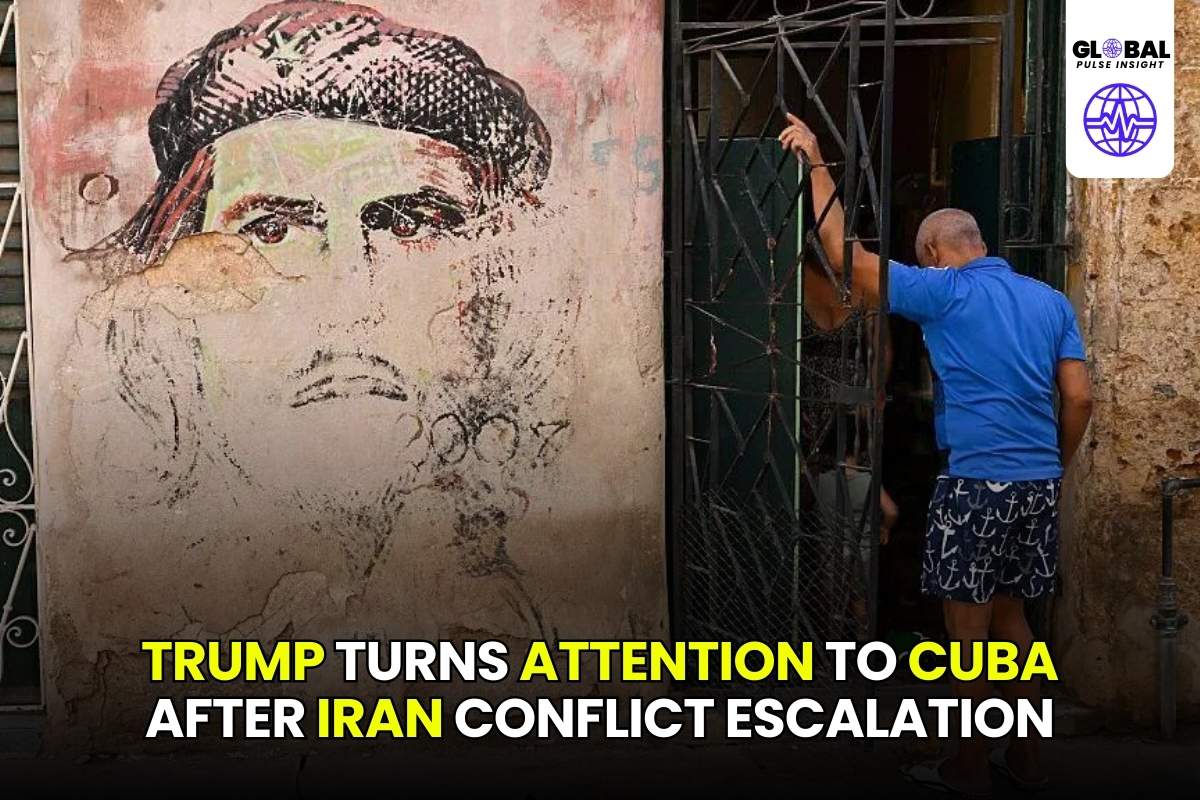
Recent remarks by Donald Trump have brought renewed global attention to the political and economic crisis unfolding in Cuba. Following escalating tensions with Iran, Trump indicated that Cuba could soon become a central focus of his administration’s strategic agenda in the Western Hemisphere.
The statement comes at a time when Cuba is experiencing one of its most serious economic and energy crises in decades. Widespread blackouts, fuel shortages, and declining tourism revenues have created mounting pressure on the island’s fragile economy. As the United States evaluates its next foreign policy priorities, analysts believe the Caribbean nation could again become a key geopolitical issue.
Understanding the implications of Trump’s comments requires examining Cuba’s historical relationship with the United States, the economic difficulties currently affecting the island, and the broader regional dynamics shaping policy decisions in the Americas.
Historical Background
Relations between the United States and Cuba have been defined by decades of political rivalry and economic sanctions. The tensions began after the Cuban Revolution, which brought Fidel Castro to power. Shortly afterward, Cuba aligned itself with the Soviet Union, creating a major Cold War flashpoint only 90 miles from the U.S. mainland.
One of the most dramatic moments in this relationship occurred during the Cuban Missile Crisis, when the discovery of Soviet nuclear missiles in Cuba pushed the world to the brink of nuclear conflict. Although the crisis ended through diplomatic negotiations, the distrust between Washington and Havana continued for decades.
The United States imposed a comprehensive economic embargo on Cuba in the early 1960s. The policy aimed to isolate the Cuban government economically and politically. While some diplomatic openings occurred in later years-particularly during the administration of Barack Obama, which restored diplomatic relations in
2015-many restrictions remained in place.
Over time, Cuba’s economy adapted to these constraints by building economic partnerships with countries such as Venezuela, which provided subsidized oil shipments in exchange for Cuban medical and technical services.
However, this arrangement became increasingly fragile as Venezuela’s own political and economic crises intensified.
Key Developments
Trump’s recent comments about Cuba emerged shortly after discussions surrounding U.S. policy toward Iran. While addressing international security concerns, he suggested that Cuba could soon become another major priority for Washington.
The timing of these remarks coincides with deepening economic challenges inside Cuba. Over the past year, the island has experienced repeated nationwide power outages caused by shortages of crude oil and aging power infrastructure. Without sufficient fuel imports, many of Cuba’s thermal power plants have struggled to generate electricity.
Energy shortages have affected transportation systems, manufacturing output, and daily life for ordinary citizens. In cities such as Havana, residents have reported frequent electricity disruptions lasting several hours or even entire days.
The energy crisis is also linked to geopolitical shifts in Latin America. For many years, Venezuela provided Cuba with roughly 50,000 to 80,000 barrels of oil per day, according to regional energy estimates. As Venezuela’s production declined due to sanctions and economic instability, those shipments were reduced significantly.
Meanwhile, tourism-another major pillar of Cuba’s economy-has faced increasing challenges. International airlines and travel operators have struggled with logistical issues related to fuel availability and infrastructure reliability.
The combination of declining oil imports, reduced tourism income, and persistent sanctions has created a difficult economic environment for the island.
Regional and Global Implications
Trump’s remarks about Cuba are significant because they suggest a renewed focus on the Caribbean within broader U.S. foreign policy. Historically, Washington has viewed the region as strategically important due to its proximity and political influence across Latin America.
If the United States intensifies pressure on Cuba, it could reshape diplomatic relationships throughout the hemisphere. Countries such as Mexico and Brazil may face decisions about how closely to align with U.S. policy toward Havana.
At the same time, global powers like China and Russia have expanded their economic and diplomatic engagement with Cuba in recent years. These relationships include infrastructure investment, financial cooperation, and technological assistance.
As geopolitical competition between major powers intensifies, Cuba’s strategic location could once again become a point of international interest.
Furthermore, instability in Cuba could trigger broader regional effects, including increased migration across the Caribbean and southern United States. Migration waves from Cuba have historically occurred during periods of economic crisis or political tension.
Analysis: Strategic Pressure or Negotiation Leverage?
From a strategic perspective, Trump’s comments may reflect a broader effort to strengthen U.S. influence in the Western Hemisphere. By highlighting Cuba’s vulnerabilities, Washington could be signaling that it intends to maintain or expand economic pressure.
Supporters of this approach argue that strong diplomatic and economic measures could encourage political reforms within Cuba. They believe that sustained pressure might eventually lead to negotiations that reshape the island’s economic system.
However, critics argue that sanctions and economic restrictions often affect ordinary citizens more than government leadership. Energy shortages and declining economic activity can create humanitarian challenges without necessarily producing political change.
Another possible interpretation is that Trump’s remarks are intended to create leverage for future diplomatic engagement. By emphasizing pressure publicly, the United States could be attempting to strengthen its negotiating position if talks with Cuban officials occur.
Data and Economic Indicators
Several economic indicators illustrate the scale of Cuba’s current difficulties.
- Cuba’s economy contracted by approximately 2–3% annually in recent years, according to regional economic assessments.
- Tourism once generated over $3 billion per year for the Cuban economy before the pandemic and subsequent travel disruptions.
- The country imports a majority of its energy needs, making it highly vulnerable to supply interruptions.
Energy infrastructure also presents a major challenge. Many of Cuba’s power plants were built in the 1970s and 1980s, meaning they now require significant modernization.
Without large-scale investment in energy production or renewable technologies, the country may continue to experience periodic electricity shortages.
Practical Insights: Why This Matters
For global observers, the evolving situation in Cuba highlights how economic crises, geopolitical competition, and domestic governance can intersect.
Cuba’s experience demonstrates the vulnerability of small economies that depend heavily on external energy supplies. It also illustrates how international sanctions and shifting alliances can shape domestic conditions over time.
For policymakers and analysts, the situation raises important questions about the effectiveness of long-term sanctions strategies. Some experts argue that economic engagement may encourage gradual reforms, while others believe that sustained pressure is necessary to produce political change.
For ordinary readers, the story of Cuba is also a reminder of how geopolitical decisions affect everyday life. Power outages, limited transportation, and declining tourism are not abstract policy debates-they are challenges faced by millions of people on the island.
Conclusion
Trump’s suggestion that Cuba may soon become a priority for U.S. policy reflects a complex moment in regional geopolitics. The island is confronting a severe energy crisis, economic instability, and shifting international alliances.
Whether Washington chooses to increase pressure, pursue negotiations, or adopt a mixed strategy will shape the future of U.S. – Cuba relations. At the same time, developments inside Cuba-particularly economic reforms and infrastructure investment-will determine how the country navigates its current challenges.
As global attention shifts between multiple international crises, Cuba’s situation remains an important case study in how geopolitics, economics, and domestic governance interact in shaping the future of nations.
Disclaimer:
This article provides analytical commentary based on publicly available information and does not represent official statements from any government or organization.