
Introduction
Public safety, especially for women,Laser Tech remains a critical concern in modern urban spaces. Crowded train stations, airports, and public transport hubs provide convenience, but they can also become spaces where individuals feel vulnerable. Women, in particular, frequently report experiences of harassment, stalking, or intimidation while moving through these areas, often during evenings or in less populated sections of stations and platforms.
To address these concerns, technology companies are now exploring advanced solutions that proactively identify potentially threatening behavior. One promising development involves laser-based crowd monitoring systems capable of detecting unusual movement patterns that may indicate predatory behavior. Unlike traditional surveillance cameras, these systems do not initially identify individuals, instead highlighting suspicious actions for human security teams to evaluate.
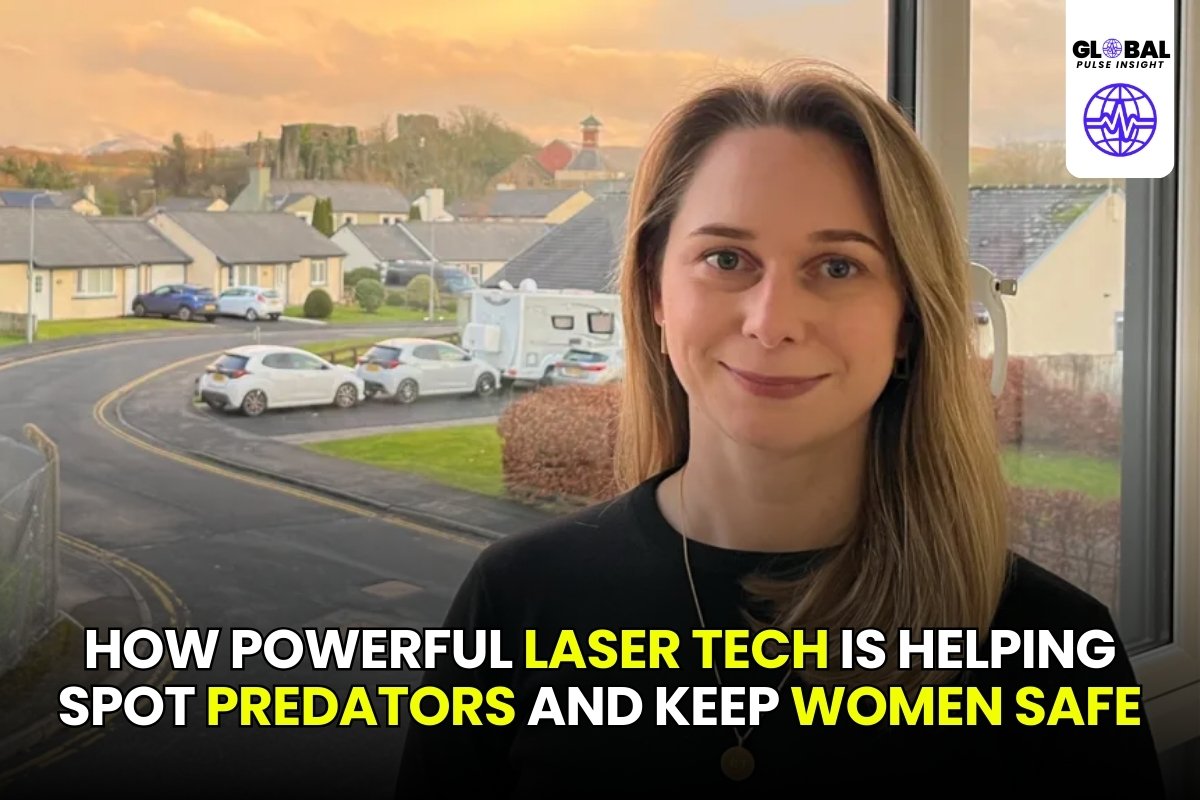
Rosie Richardson, product and strategy director at the British technology firm Createc, is spearheading a project to create such a system. Her goal is to shift the responsibility for safety from individuals to public authorities, transport operators, and law enforcement, offering women enhanced protection in public spaces.
Historical Background
Efforts to improve public safety through technology are not new. For decades, cities around the world have relied on CCTV surveillance to monitor crowds in transportation hubs, shopping districts, and other public spaces. In the United Kingdom, for example, major stations such as King’s Cross railway station have been equipped with extensive camera networks designed to deter crime and improve crowd management.
However, traditional cameras have limitations. Low lighting conditions, blind spots, and restricted fields of view reduce their effectiveness, and reviewing footage after an incident cannot prevent harm before it occurs. Furthermore, these systems place a significant burden on human operators who must monitor countless screens simultaneously.
Growing awareness of gender-based harassment in public spaces has added urgency to these challenges. Surveys consistently show that women modify their daily routines, avoid certain areas, and adopt precautionary measures out of concern for personal safety. Technology aimed at predicting threats rather than reacting to them is increasingly seen as a critical tool for addressing these risks.
Laser-based monitoring technology originated as a tool for crowd management in airports, train stations, and large events. By tracking movement patterns rather than personal identity, it offers a potentially powerful solution for identifying suspicious behavior while preserving individual privacy.
Key Developments
The system being developed by Createc tracks people in public spaces as anonymous points on a digital map, using advanced laser sensors and mathematical modeling to analyze movement patterns.
If someone behaves unusually-for instance, loitering near another individual, following a person through a station, or choosing to sit unnecessarily close on an otherwise empty platform-the system alerts security personnel. Human operators then assess the situation using CCTV or by sending staff to the scene.
Rosie Richardson highlights that the system is designed to detect patterns of predatory behavior, not to automatically classify someone as a threat. Its focus is on alerting authorities to situations that require attention, reducing the burden on women to protect themselves constantly.
Richardson explains, “Throughout my entire life, the onus has always been on women to protect themselves. Technology like this allows responsibility to shift back to public authorities, space operators, and law enforcement.”
Simulated trials of the system have already been conducted, and real-world testing in train stations and other public areas is planned. By using data collected from crowded locations such as King’s Cross, the system has learned to differentiate between normal social interactions and suspicious patterns that might indicate a threat.
Personal Experiences Driving Innovation
Richardson’s dedication to this project is deeply personal. At age 12, she experienced a sexual assault while watching a stage of the Tour de France. She recalls, “A man sexually assaulted me in a crowd and then wandered off. Nothing happened. It was that kind of bystander effect-lots of people saw, but no one intervened.”
Her experiences highlight the challenges women face in crowded public spaces and the importance of proactive intervention. She believes that if laser monitoring technology had existed at the time, her assault might have been prevented.
Richardson’s motivation is further influenced by tragedy in her family. When she was seven, her older brother was killed in a street altercation. She explains, “I can viscerally feel what it’s like to experience the ripple effect of something like that in real life. If our technology helps prevent even a single serious incident, that’s our life’s work achieved.”
Expert Opinions
Dr. Emma Cunningham, a criminologist at the University of East London, emphasizes that while technology can improve safety, societal change is also essential.
She notes that women often plan daily activities around personal safety, highlighting the prevalence of gender-based violence. Dr. Cunningham stresses that attitudes must shift from victim-blaming to perpetrator-blaming, and education programs must challenge everyday sexism and misogyny.
According to Dr. Cunningham, technological solutions should complement, not replace, human interventions, reporting mechanisms, and community awareness programs.
Data, Statistics, and Figures
Statistics underline the importance of improving safety for women. Data from the Office for National Statistics and the charity Women’s Aid reveal that roughly one in four women experience domestic abuse during their lifetime. Additionally, more than one woman per week in the UK is killed by a current or former partner.
These figures illustrate the broader cultural context in which innovations like laser-based monitoring are being developed. Even minor incidents in public spaces can significantly affect women’s sense of safety, making proactive prevention crucial.
Regional and Global Implications
Behavioral monitoring technologies have implications beyond individual safety. Cities worldwide are increasingly investing in smart-city infrastructure to improve public safety, emergency response, and crowd management.
Laser-based systems could be deployed in train stations, airports, stadiums, and other densely populated areas to detect abnormal behavior in real time. At the same time, careful regulatory oversight is necessary to balance safety with privacy concerns, particularly in countries with strict data protection laws like the European Union.
Globally, the development of predictive safety technologies reflects shifting priorities: ensuring public security while minimizing invasive surveillance. Systems that prioritize anonymized tracking, like the one developed by Createc, may provide a model for other cities and countries seeking similar solutions.
Analysis and Predictions
If the technology proves effective, it could revolutionize the way public safety is managed. Real-time behavioral monitoring may allow authorities to intervene before harassment or assault occurs, reducing reliance on post-incident investigations.
Future iterations of the system may incorporate artificial intelligence to improve detection accuracy, differentiate between routine behavior and potential threats, and reduce false alarms. However, technology alone cannot solve the broader problem of gender-based violence. Societal change, education, and accountability remain critical.
The combination of predictive technology and human oversight could make public spaces safer, offering women greater confidence to move freely without fear. Over time, systems like these may become standard in major urban centers globally.
Practical Insights
For commuters and travelers, this technology offers enhanced situational awareness and early warning mechanisms. For city planners, data from laser-based monitoring can inform safer urban design, better lighting, and improved emergency response protocols.
Societally, implementing proactive safety systems reflects a broader commitment to gender equality and public well-being. By detecting threats before they escalate, such technologies may reduce harassment, increase public trust, and help create spaces where everyone can feel secure.
Faqs
1. What is predator-spotting laser technology?
Predator-spotting laser technology uses laser sensors to track people’s movements anonymously in public spaces. It identifies unusual behavior, such as loitering or following someone, and alerts security personnel for potential intervention.
2. How does the system protect women in public spaces?
By detecting suspicious behavior in real time, the system allows security teams to respond before harassment or assault occurs. It helps shift safety responsibility from individuals to public authorities and reduces women’s exposure to potentially dangerous situations.
3. Where is this technology being tested?
The system is being developed by Createc in Cockermouth, Cumbria, UK. It is based on technology already used to monitor crowds in transport hubs, including King’s Cross railway station, and is now moving to real-life trials in public spaces.
4. Does predator-spotting laser tech violate privacy?
No. The system tracks individuals as anonymous points on a map rather than capturing identifiable images. Only when suspicious behavior is detected are CCTV cameras directed or staff sent to intervene, maintaining privacy while enhancing safety.
5. Can this technology completely prevent harassment or assault?
While the system significantly improves early detection, experts emphasize that societal change, education, and enforcement are also crucial. Technology complements human intervention but cannot replace legal, social, and cultural efforts to reduce violence against women.
Conclusion
Laser-based behavioral monitoring represents a promising advancement in public safety. Developed by innovators like Rosie Richardson at Createc, it combines anonymized tracking with real-time alerts to security personnel, allowing for early intervention in potentially threatening situations.
While not a standalone solution, this technology complements broader societal efforts to reduce gender-based violence, challenge misogynistic attitudes, and improve public awareness.
As urban spaces continue to grow, and concerns about personal safety persist, such innovations may play a pivotal role in shaping safer, more inclusive cities worldwide.
Disclaimer:
This article provides analytical commentary based on publicly available information and does not represent official statements from any government or organization.