
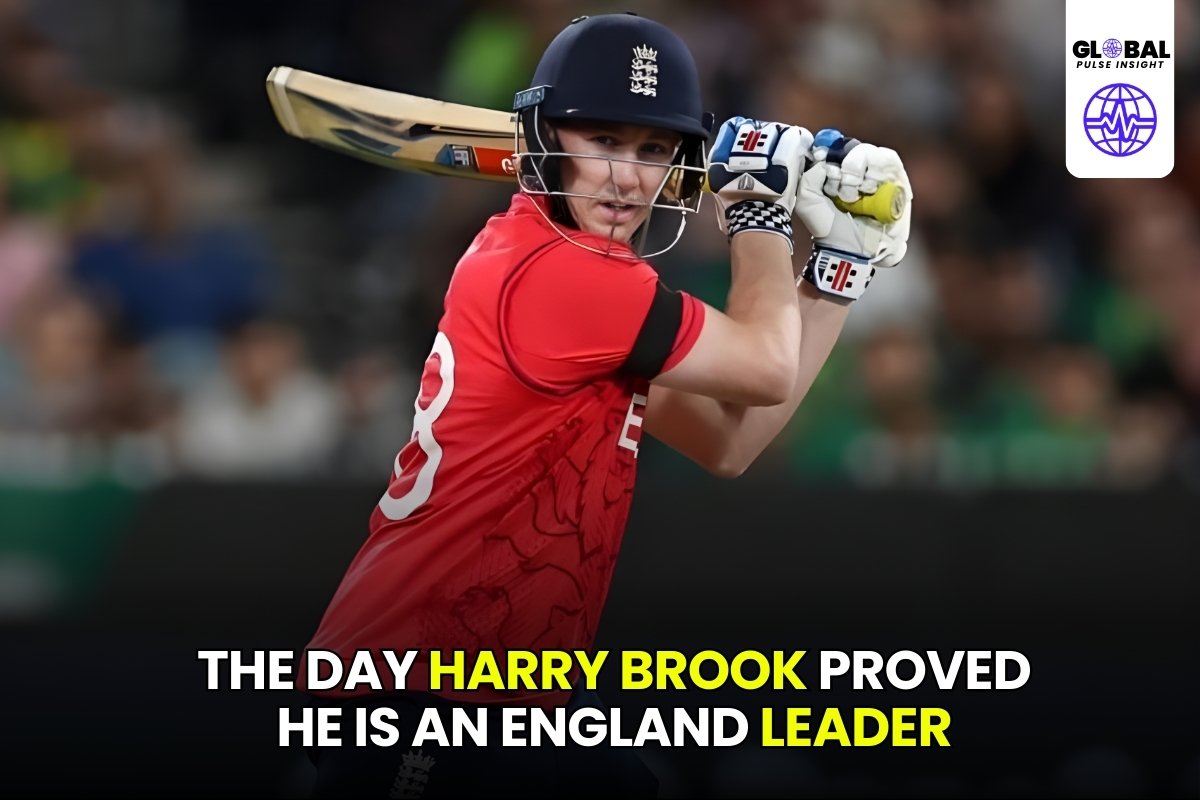
Leadership in English cricket has always taken many forms. From the strategic planning of Sir Andrew Strauss to the determined resilience of Sir Alastair Cook and Heather Knight, and the inspirational presence of Ben Stokes, each captain has left a distinct mark on the game. But leadership isn’t always about aura or legacy-it’s about rising to the occasion when it matters most.
For Harry Brook, that defining moment came in Pallekele during a T20 international against Pakistan.
His innings-a stunning century off just 51 balls-secured victory for England and earned them a place in the World Cup semi-finals. It was the performance that transformed Brook from a talented batsman into a true leader for his team.
A Rocky Winter Before Redemption
Brook’s journey to leadership has not been without turbulence. Earlier in the year, he faced intense scrutiny after:
- An altercation with a nightclub bouncer in Wellington.
- Disappointing performances during the Ashes.
- Attempts to conceal mistakes, which later required public acknowledgment.
Thousands of England supporters had invested hope in him, especially after the Ashes tour. Brook owed them a performance, and in Pallekele, he repaid that faith with one of the most mature innings of his career.
Despite his past achievements-a T20 World Cup medal in 2022 and a Test triple century-Brook had sometimes struggled to deliver match-winning performances on the biggest stages. His previous scores against Australia and India, though technically impressive, had not secured victories. Questions about his ability to lead under pressure lingered.
The Pallekele Masterclass
England’s chase of 165 in Pallekele began shakily. Phil Salt fell first ball, and the team quickly found themselves in trouble at 58-4. It was the perfect moment for a leader to step up-and Harry Brook did just that.
Key Elements of Brook’s Leadership and Batting:
- Strategic Aggression: While England scored 11 runs in the second over and 17 in both the sixth and eleventh, Brook combined destructive hitting with careful strike rotation. He ran nine twos, ensuring the team maintained momentum.
- Tactical Awareness: After the dismissal of Tom Banton, Brook calmly took singles for the next five balls, demonstrating his sharp cricketing brain and understanding of match situations.
- Composure Under Pressure: The innings showcased not just power, but patience. Brook adapted his game to the fall of wickets, proving he could think like a leader while batting.
Brook explained his approach: “I knew we were losing wickets, but my job was still to try to put pressure on the opposition throughout the innings.” This measured mindset highlighted the intelligence and maturity behind his game, qualities that define true leadership.
Mentorship from Brendon McCullum
Brook’s success in Pallekele was also shaped by his close collaboration with coach Brendon McCullum, the architect of England’s aggressive “Bazball” style. McCullum suggested promoting Brook from number five to number three in the batting order-a move designed to maximize powerplay opportunities and influence the innings from an earlier stage.
- Pre-match Strategy: McCullum revealed the plan to Brook less than 12 hours before the game. The element of surprise added strategic value.
- Execution: Brook executed the strategy flawlessly, taking control of the innings while stabilizing England’s fragile start.
- Team Impact: Other players, such as Jacob Bethell, had to adjust their positions, but Brook’s leadership made the transition seamless.
Brook acknowledged his coach’s influence: “Baz had the discussion with me this morning about going up the order and trying to maximize the powerplay.” McCullum’s mentorship and trust played a crucial role in Brook’s emergence as a leader.
A Leader in the Making
Brook’s innings wasn’t just about runs-it was about leadership. He demonstrated qualities that extend beyond batting:
- Decision-making: Brook made key decisions under high pressure, guiding England through a precarious chase.
- Calmness: Despite wickets falling at regular intervals, he maintained composure and paced his innings strategically.
- Inspiration: His performance inspired teammates and fans alike, showcasing that leadership is as much about influence as personal achievement.
This innings also silenced critics who questioned his ability to lead. Brook has now shown that he can combine tactical awareness, physical skill, and psychological resilience-the hallmarks of a future captain.
Overcoming Personal and Professional Challenges
Brook’s winter was marked by challenges both on and off the field:
- Personal setbacks, including the nightclub incident.
- Inconsistent form during previous series.
- Public scrutiny and media criticism.
Instead of allowing these difficulties to define him, Brook used them as motivation. His preparation, including a focused fitness regime and mental conditioning, ensured he was ready when it mattered most. His dedication demonstrates the resilience needed to lead at the highest level.
England’s Bright Future with Brook
With his Pallekele performance, Brook has positioned himself as a central figure in England’s T20 World Cup campaign. England now approaches their semi-final against India with a renewed sense of confidence.
Brook’s leadership also benefits England in the long term:
- Strategic Depth: His ability to read games adds tactical flexibility to England’s line-up.
- Team Morale: A strong leader inspires teammates, improving cohesion and performance under pressure.
- Role Model: Young players can now look up to Brook as a professional who can balance talent with responsibility.
England is just two wins away from potentially lifting the T20 World Cup trophy. If Brook continues his current form, he could join the ranks of England captains like Paul Collingwood, Eoin Morgan, and Jos Buttler to lift the trophy-a remarkable achievement for a young leader in the making.
Why Harry Brook Stands Out
Harry Brook may not have the traditional aura of some England legends, but he brings something equally vital:
- Sharp cricketing intellect.
- Calmness under pressure.
- Adaptability and tactical acumen.
- Commitment to team success above personal glory.
In Pallekele, Brook didn’t just score a century-he led England through a testing chase, demonstrating qualities that make him a natural leader. It was the perfect balance of aggression, intelligence, and composure that England needed to thrive in high-stakes matches.
Conclusion
Harry Brook’s innings in Pallekele is more than just a memorable performance-it is a statement. England now has a leader capable of guiding the team under pressure, making smart decisions, and inspiring teammates to achieve their best.
Brook has shown that leadership in cricket isn’t solely about titles or experience-it’s about action, intelligence, and courage on the field. With this century, he has proven that he is not just a talented batsman, but a true England leader poised to shape the future of English cricket.
As fans and analysts eagerly anticipate England’s upcoming World Cup matches, one thing is clear: backing Harry Brook as a leader is no longer a question-it’s a necessity for England’s continued success.
FAQs
Q1: How did Harry Brook become an England leader?
Harry Brook became a leader through his performance and strategic thinking, particularly during the T20 World Cup match against Pakistan, where he scored a century and guided England to victory.
Q2: What was significant about Brook’s century in Pallekele?
His 100 off 51 balls demonstrated tactical intelligence, composure under pressure, and leadership qualities that inspired his teammates, securing England a spot in the World Cup semi-finals.
Q3: Who influenced Harry Brook’s promotion in the batting order?
Coach Brendon McCullum suggested promoting Brook from number five to number three, which allowed him to influence the game earlier and maximize England’s powerplay opportunities.
Q4: How does Brook’s leadership impact young players?
Brook serves as a role model, showing that tactical awareness, resilience, and calm decision-making are key traits for success, inspiring younger teammates to emulate his approach.
Q5: What makes Harry Brook different from other England leaders?
Unlike some leaders known for aura or strategy, Brook combines aggression with intelligence, adaptability, and a strong cricketing brain, making him a modern, action-oriented leader.