
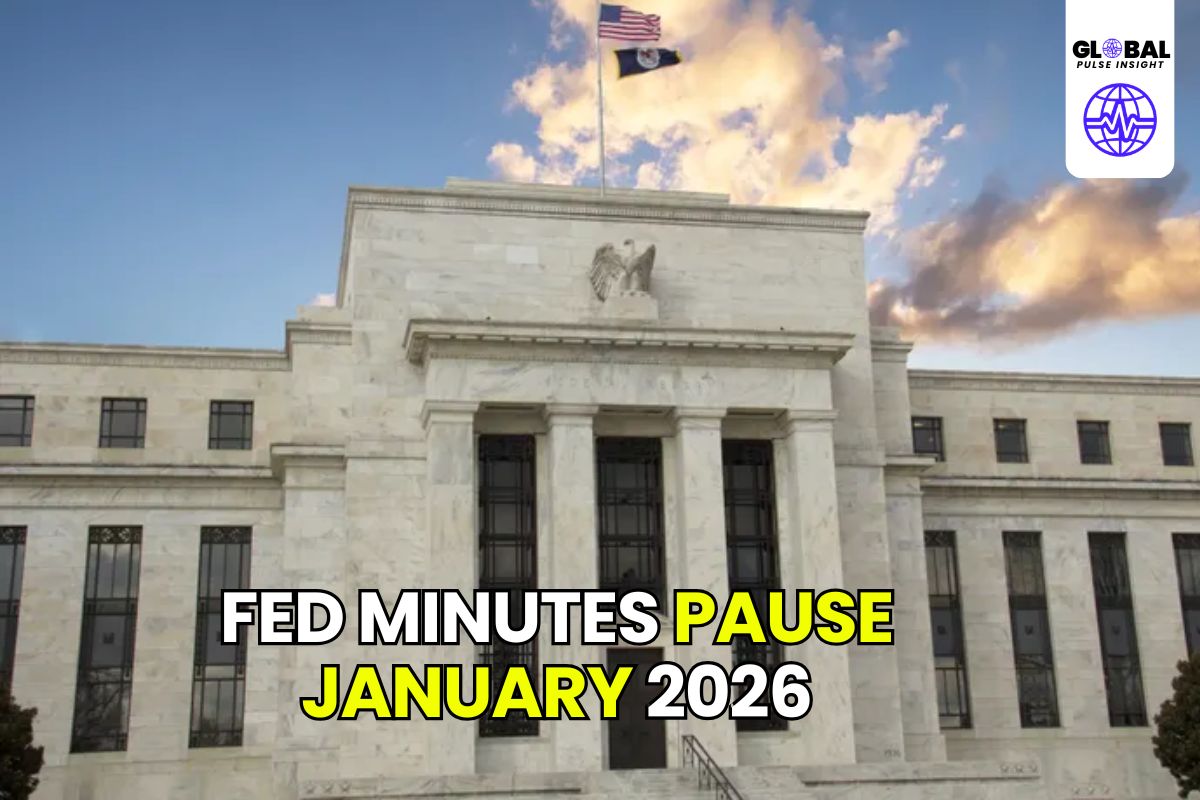
When the latest Fed minutes January 2026 were released, markets expected clarity. Instead, they revealed a subtle but significant divide inside the world’s most influential central bank. While policymakers agreed to hold interest rates steady in January, the discussion beneath that pause told a more complicated story – one that could shape global markets for months ahead.
The Federal Reserve minutes rate hike talk suggests that while a pause remains in place, the door to further tightening has not been shut. Investors, economists, and policymakers across the globe are now parsing the language carefully, trying to understand what the US central bank minutes 2026 truly signal.
In this in-depth January Fed minutes analysis, we break down what happened, why it matters, and what it means for the US economy and global markets.
A United Front on the Pause – But Not on What Comes Next
At the January meeting, officials agreed almost unanimously to maintain current borrowing costs. The Fed rate pause and future hikes discussion, however, revealed underlying tension.
The policy rate remains within its current target range after a series of cuts last year. According to the Fed meeting minutes summary, policymakers believed holding steady would allow them to evaluate how previous rate adjustments were influencing inflation and employment.
But the Fed minutes show division on what comes next.
Key Takeaways from the January Meeting
- Rates were kept unchanged.
- Most officials supported a wait-and-see approach.
- A small group raised concerns about inflation staying elevated.
- Others suggested additional rate cuts could still be appropriate later.
- Some policymakers even discussed potential hikes if inflation remains stubborn.
This evolving Federal Reserve rate outlook January reflects growing uncertainty about the path forward.
Federal Reserve Policy Divide: Inflation vs. Growth
The core issue driving the Federal Reserve policy divide is straightforward: Should the central bank prioritize fighting inflation or protecting economic growth?
Inflation remains above the Fed’s 2% target. Although it has cooled compared to previous peaks, it has not fully returned to desired levels. This has intensified the inflation and Fed rate expectations debate.
Some officials argued:
- Inflation risks remain tilted to the upside.
- Premature rate cuts could reignite price pressures.
- The labor market remains resilient.
Others countered:
- Economic momentum could weaken if rates stay high for too long.
- Signs of disinflation are emerging.
- Maintaining restrictive policy may unnecessarily slow job growth.
This tension was evident throughout the central bank rate discussion, reinforcing that policymakers are far from unified on future action.
What Fed Minutes Revealed About Rate Hike Prospects
One of the most closely watched aspects of the US central bank minutes 2026 was whether the possibility of renewed tightening was seriously considered.
The Fed signals potential rate hikes language stood out. While not a formal shift in policy, “several” participants acknowledged that upward adjustments could be appropriate if inflation fails to decline as expected.
This significantly impacts Fed rate hike prospects.
In practical terms, this means:
- Rate cuts are not guaranteed.
- Markets cannot rule out hikes.
- The policy path remains data-dependent.
For investors tracking what Fed minutes revealed, this subtle shift in tone matters. It indicates that the central bank is keeping its options open – a hallmark of cautious policymaking during uncertain economic conditions.
The Economic Backdrop: Mixed Signals
The broader US economy and Fed outlook remains complicated.
Inflation Trends
- Consumer price growth has moderated.
- However, inflation remains roughly one percentage point above target.
- Some components, particularly services, remain sticky.
Labor Market Strength
- Job growth has exceeded expectations.
- Unemployment remains low.
- Wage pressures continue in certain sectors.
These mixed signals complicate the Fed interest rate decision pause. Policymakers must balance persistent inflation against signs of economic resilience.
The Fed meeting highlights show that no consensus has formed around a clear next move.
Why the Fed Rate Pause and Future Hikes Debate Matters Globally
The US monetary policy news coming from Washington does not just affect Americans. Global financial markets closely track every development in the Federal Reserve minutes rate hike talk.
Higher US rates typically:
- Strengthen the dollar.
- Increase borrowing costs globally.
- Put pressure on emerging markets.
Conversely, rate cuts can:
- Stimulate global risk appetite.
- Support equity markets.
- Ease financial conditions worldwide.
That’s why the January Fed minutes analysis is not just a domestic story – it’s an international one.
Market Reaction to Fed Minutes
The immediate market reaction to Fed minutes was cautious.
Investors initially interpreted the pause as supportive. However, the acknowledgment of possible hikes introduced uncertainty. Treasury yields fluctuated, equity markets showed volatility, and analysts adjusted their expectations for the next few meetings.
The Fed policymakers split on rates has created a more complex environment for traders. Futures markets now reflect a more divided outlook on the probability of rate cuts versus hikes.
This reinforces that the Fed minutes January 2026 were more hawkish than some had anticipated.
Inside the Central Bank Rate Discussion
The internal debate reflected in the US central bank minutes 2026 shows that policymakers are carefully weighing risks.
The Hawkish View
Those concerned about inflation argue:
- Price stability must remain the priority.
- The credibility of monetary policy is at stake.
- Inflation expectations must remain anchored.
They emphasize that even discussing rate hikes strengthens the Fed’s anti-inflation stance.
The Dovish View
Those leaning toward easing suggest:
- Disinflation trends are progressing.
- Maintaining restrictive policy too long could hurt employment.
- Economic momentum could slow rapidly.
This Federal Reserve policy divide illustrates the difficulty of navigating a post-pandemic economy still adjusting to structural shifts.
The Road Ahead: Data Will Decide
The Federal Reserve rate outlook January makes one thing clear: the path forward depends on incoming data.
Key indicators to watch include:
- Monthly inflation reports.
- Employment data.
- Wage growth figures.
- Consumer spending trends.
- Global economic developments.
The Fed rate pause and future hikes framework is now explicitly two-sided. That is, both cuts and hikes remain possible depending on economic performance.
In the broader US economy and Fed outlook, flexibility is the defining theme.
What This Means for Businesses and Consumers
Understanding the Fed interest rate decision pause is crucial for households and companies alike.
For Businesses
- Borrowing costs remain elevated.
- Investment decisions may be delayed.
- Financing conditions remain tight.
For Consumers
- Mortgage rates could remain high.
- Credit card interest remains costly.
- Savings accounts may continue offering attractive yields.
The inflation and Fed rate expectations dynamic affects everyday financial decisions. That’s why the Fed meeting minutes summary is more than just policy jargon – it impacts real lives.
A Hawkish Tilt Beneath the Surface
Although no rate changes were announced, the tone of the January Fed minutes analysis leaned slightly hawkish.
The acknowledgment of potential hikes signals:
- Confidence in economic resilience.
- Concern about persistent inflation.
- A willingness to act if necessary.
This nuance is why the Fed minutes show division has become the dominant narrative.
Rather than signaling a clear pivot toward easing, the Federal Reserve minutes rate hike talk underscores caution.
Frequently Asked Questions (FAQs)
1. What did the Fed minutes January 2026 reveal about future rate hikes?
The Fed minutes January 2026 revealed that while rates were held steady, several policymakers discussed the possibility of raising rates again if inflation does not continue declining. This has kept Fed rate hike prospects alive.
2. Why do Fed minutes show division among policymakers?
The Fed minutes show division because some officials prioritize controlling inflation, while others are concerned about slowing economic growth. This ongoing Federal Reserve policy divide reflects uncertainty in the broader economy.
3. How does the Fed interest rate decision pause affect markets?
The Fed interest rate decision pause initially supports stability, but the discussion of possible hikes has influenced the market reaction to Fed minutes, leading to volatility in bonds and equities.
4. What is the significance of the Federal Reserve rate outlook January?
The Federal Reserve rate outlook January indicates that future decisions are data-dependent. Both cuts and hikes remain possible depending on inflation and economic performance.
5. Why is the US central bank minutes 2026 important globally?
The US central bank minutes 2026 influence global borrowing costs, currency markets, and investment flows. Because the US dollar plays a central role in global finance, changes in US monetary policy have worldwide consequences.
Conclusion: A Pause Today, Uncertainty Tomorrow
The latest Fed minutes January 2026 confirm that the central bank is in no rush to move – but it is far from complacent.
While the Fed interest rate decision pause provides short-term stability, the internal Federal Reserve policy divide keeps markets guessing. The discussion of renewed tightening ensures that the Fed rate hike prospects remain part of the conversation.
For global observers following US monetary policy news, the message is clear: flexibility and vigilance define the current moment.
As the next meeting approaches, all eyes will remain on inflation data, labor market trends, and the evolving market reaction to Fed minutes.
Stay connected with Global Pulse Insight for trusted, in-depth international coverage and expert analysis of critical economic developments shaping our world.
References
- Federal Reserve Board – FOMC Meeting Minutes (January 2026)
https://www.federalreserve.gov/monetarypolicy/fomccalendars.htm - Federal Open Market Committee (FOMC) – Monetary Policy Statements
https://www.federalreserve.gov/monetarypolicy/fomc.htm - U.S. Bureau of Labor Statistics (CPI & Employment Data)
https://www.bls.gov - U.S. Department of Commerce – Economic Indicators
https://www.commerce.gov - Federal Reserve Economic Data (FRED)
https://fred.stlouisfed.org