Introduction
The sudden escalation of tensions in the Middle East has brought an unexpected frontline into focus: Dubai, a city long regarded as a symbol of stability, luxury, and global connectivity. Recent missile and drone attacks attributed to Iran have disrupted daily life in the United Arab Emirates, challenging the perception that Gulf economic hubs are insulated from regional conflicts.
While the strikes appear to be part of a broader confrontation involving the United States and Israel, their impact on Dubai highlights a dangerous shift: economic centers are no longer guaranteed safe zones in modern warfare.
Historical Background
To understand the current escalation, it is essential to examine the longstanding tensions between Iran and its regional and global adversaries. Since the 1979 Iranian Revolution, Tehran’s relationship with Washington and its allies has remained adversarial, shaped by sanctions, proxy conflicts, and ideological rivalry.
Over the past two decades, Iran has expanded its influence through allied groups across Iraq, Syria, Lebanon, and Yemen. This “axis of resistance” strategy has allowed it to project power asymmetrically, often avoiding direct confrontation while maintaining strategic pressure.
Meanwhile, Gulf states such as the UAE have pursued a different path-focusing on economic diversification, tourism, and global trade. Cities like Dubai became international hubs, largely avoiding direct conflict despite being geographically close to volatile regions.
However, recent years have seen a shift. Drone warfare, cyber operations, and long-range missile capabilities have blurred traditional frontlines. Incidents such as attacks on Saudi oil facilities in 2019 demonstrated that even heavily defended economic infrastructure is vulnerable. The current situation suggests that this threat has now extended further into the Gulf’s commercial heart.
Key Developments
The latest escalation unfolded over several days, during which Dubai experienced intermittent missile and drone activity. These attacks are widely seen as part of Iran’s retaliation for coordinated strikes against its interests.
Key infrastructure has been affected. Damage to Dubai International Airport-one of the busiest airports
globally-has caused widespread flight disruptions, grounding thousands of travelers and impacting international transit routes.
Prominent locations were also hit or affected by debris. On Palm Jumeirah, explosions were reported near high-end resorts, including Fairmont The Palm. Additionally, debris from intercepted drones caused fires near iconic landmarks such as the Burj Al Arab.
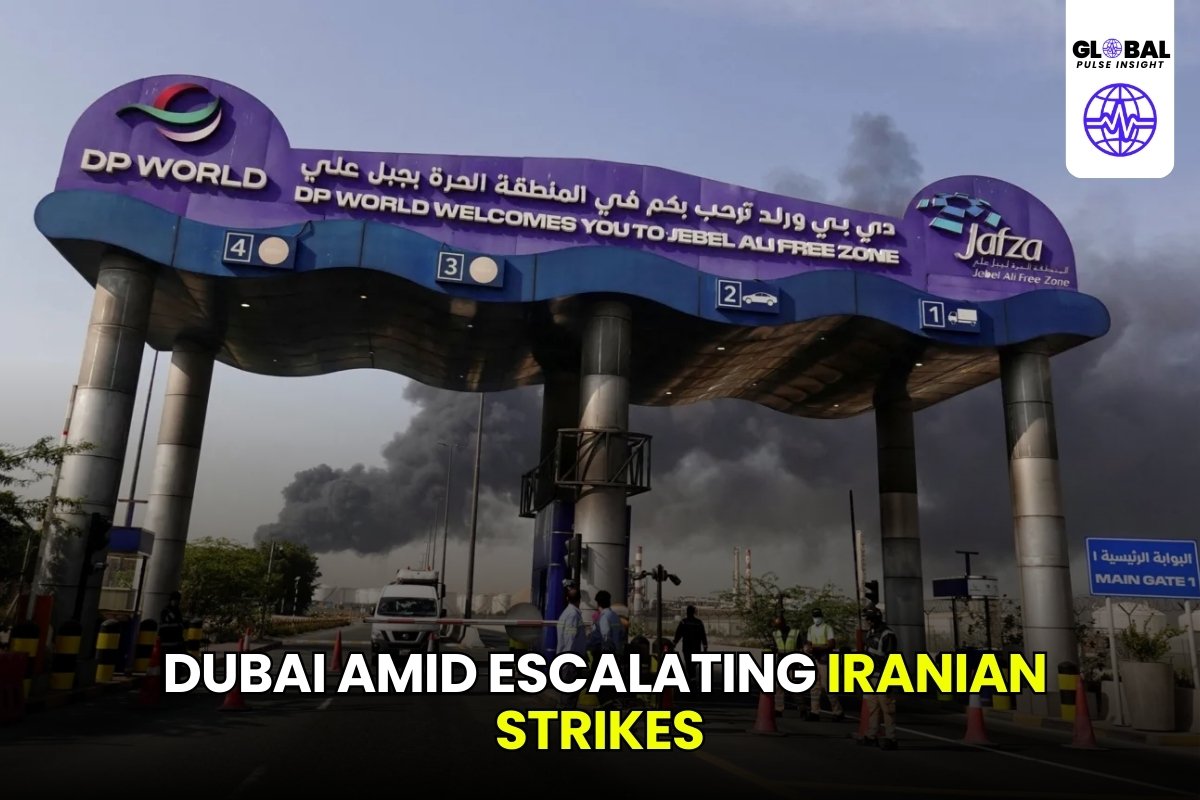
Industrial zones were not spared. Activity near Jebel Ali Port-a critical logistics hub ranked among the world’s busiest ports-was disrupted due to falling debris and localized fires.
Despite these incidents, UAE air defense systems reportedly intercepted a significant portion of incoming threats, preventing more extensive damage. Civilian accounts describe an atmosphere of tension marked by periodic explosions, emergency advisories, and temporary sheltering.
Regional and Global Implications
The implications of attacks on Dubai extend far beyond the UAE. As one of the world’s most interconnected cities, Dubai plays a central role in global finance, aviation, and logistics.
1. Disruption to Global Travel and Trade
Dubai International Airport handles tens of millions of passengers annually and serves as a major transit hub linking Europe, Asia, and Africa. Disruptions here ripple across global aviation networks, potentially affecting supply chains and business travel worldwide.
2. Energy Market Sensitivity
Although Dubai itself is not a major oil producer, the broader Gulf region is critical to global energy markets. Any escalation involving Iran raises concerns about shipping routes, particularly the Strait of Hormuz, through which roughly 20% of global oil supply passes.
3. Investor Confidence
Dubai has built its reputation as a safe haven for international investors. Even limited attacks can trigger concerns about political risk, insurance costs, and long-term investment stability in the region.
4. Strategic Realignment
The incident may accelerate security cooperation between Gulf states and Western allies. It could also influence defense spending and the adoption of advanced missile defense systems across the region.
Analysis: What Happens Next?
The current situation represents a significant escalation, but not necessarily a full-scale war-at least for now. Iran’s strategy has historically favored calibrated responses designed to signal strength without triggering overwhelming retaliation.
However, the targeting of a global city like Dubai introduces new risks. It raises the stakes for all parties involved, particularly if civilian infrastructure continues to be affected.
Possible Scenarios:
- Controlled Escalation: Limited strikes continue, with both sides avoiding direct large-scale confrontation.
- Diplomatic Intervention: International pressure-particularly from major economic partners-pushes for de-escalation.
- Broader Conflict: Miscalculation or higher casualties could lead to a wider regional war involving multiple actors.
From a strategic perspective, the UAE may strengthen its defensive posture while maintaining its economic openness. Meanwhile, global powers are likely to prioritize stability in the Gulf due to its importance to energy and trade.
Data, Statistics, and Figures
- Dubai International Airport handled over 86 million passengers annually before recent disruptions, ranking among the busiest airports worldwide.
- Jebel Ali Port is consistently ranked among the top 10 busiest ports globally, serving as a key logistics hub for the Middle East.
- The Strait of Hormuz facilitates approximately one-fifth of global oil consumption, making regional stability critical to energy markets.
- Drone and missile warfare has become increasingly prevalent, with relatively low-cost systems capable of causing high-impact disruptions.
These figures highlight why even limited attacks in Dubai carry disproportionate global consequences.
Practical Insights: Why This Matters
For readers, this situation is not just about geopolitics-it reflects broader changes in how modern conflicts unfold.
- Economic Centers Are No Longer Immune
Cities once considered safe due to their economic importance can now be targeted. - Global Interdependence Amplifies Impact
A disruption in one major hub can affect travel, trade, and markets worldwide. - Technology Is Changing Warfare
Drones and precision missiles allow for long-range attacks without traditional troop deployment. - Risk Awareness Is Increasingly Important
Businesses, travelers, and investors must factor geopolitical risks into their planning.
Faqs
1. Why is Dubai being targeted in the Iran conflict?
Dubai is not a direct military target but a strategic economic hub in the United Arab Emirates. Attacks linked to Iran are seen as part of a broader response to actions involving the United States and Israel, making regional allies and infrastructure potential targets.
2. How have the attacks affected daily life in Dubai?
Residents in Dubai have experienced disruptions such as staying indoors, hearing air defense interceptions, and dealing with temporary closures of key facilities. Travel plans, business operations, and tourism activities have also been significantly affected.
3. Is Dubai safe for tourists right now?
While UAE authorities maintain strong defense systems, the situation remains uncertain due to ongoing regional tensions. Travelers are advised to monitor official updates from the UAE Government and airlines before planning trips.
4. What impact do these attacks have on global travel?
Damage to Dubai International Airport has led to flight cancellations and delays across international routes. As one of the world’s busiest transit hubs, disruptions in Dubai can affect global travel networks and airline schedules.
5. Could this situation escalate into a larger war?
There is a risk of escalation if tensions between Iran and its adversaries intensify. However, diplomatic efforts and international pressure may help prevent a full-scale conflict. The situation remains fluid and depends on future military and political decisions.
Conclusion
The unfolding situation in Dubai marks a critical moment in Middle Eastern geopolitics. What was once seen as a distant conflict has now reached one of the world’s most prominent global cities.
While the immediate damage appears contained, the broader implications are profound. The incident underscores the fragility of stability in a highly interconnected world and highlights the evolving nature of modern conflict.
Whether this crisis escalates or de-escalates will depend on strategic decisions made in the coming days. For now, Dubai stands as a powerful reminder that even the most secure global hubs are not beyond the reach of geopolitical tensions.
Disclaimer:
This article provides analytical commentary based on publicly available information and does not represent official statements from any government or organization.