
Introduction
Chelsea’s Premier League season has been hampered by persistent defensive lapses and disciplinary issues, with red cards and set-piece goals continuing to derail their ambitions. The Blues’ 2-1 defeat to Arsenal at the Emirates Stadium highlighted recurring problems that stretch beyond a single match. With Stamford Bridge now six points outside the top four and sitting sixth in the table, questions are being raised about the squad’s culture, leadership, and resilience under pressure.
This article examines the root causes of Chelsea’s struggles, the statistical trends behind their red cards and set-piece vulnerabilities, and what these issues mean for the club’s season and long-term strategy.
Historical Background
Chelsea’s challenges with discipline and defending set-pieces are not new. The Blues have consistently ranked low on the Premier League fair-play table, finishing near the bottom in recent seasons under managers Mauricio Pochettino and Enzo Maresca. The recurring pattern of red cards and conceding from dead-ball situations suggests a cultural issue within the club, exacerbated by a young squad with limited leadership.
Former managers have attempted to address these problems, with Maresca launching an internal review before his departure. Despite initial signs of improvement under Liam Rosenior, Chelsea have again seen red cards in consecutive matches, emphasizing that these challenges are deeply ingrained rather than isolated incidents.
Key Developments
Chelsea’s latest defeat against Arsenal exposed both their defensive and disciplinary weaknesses:
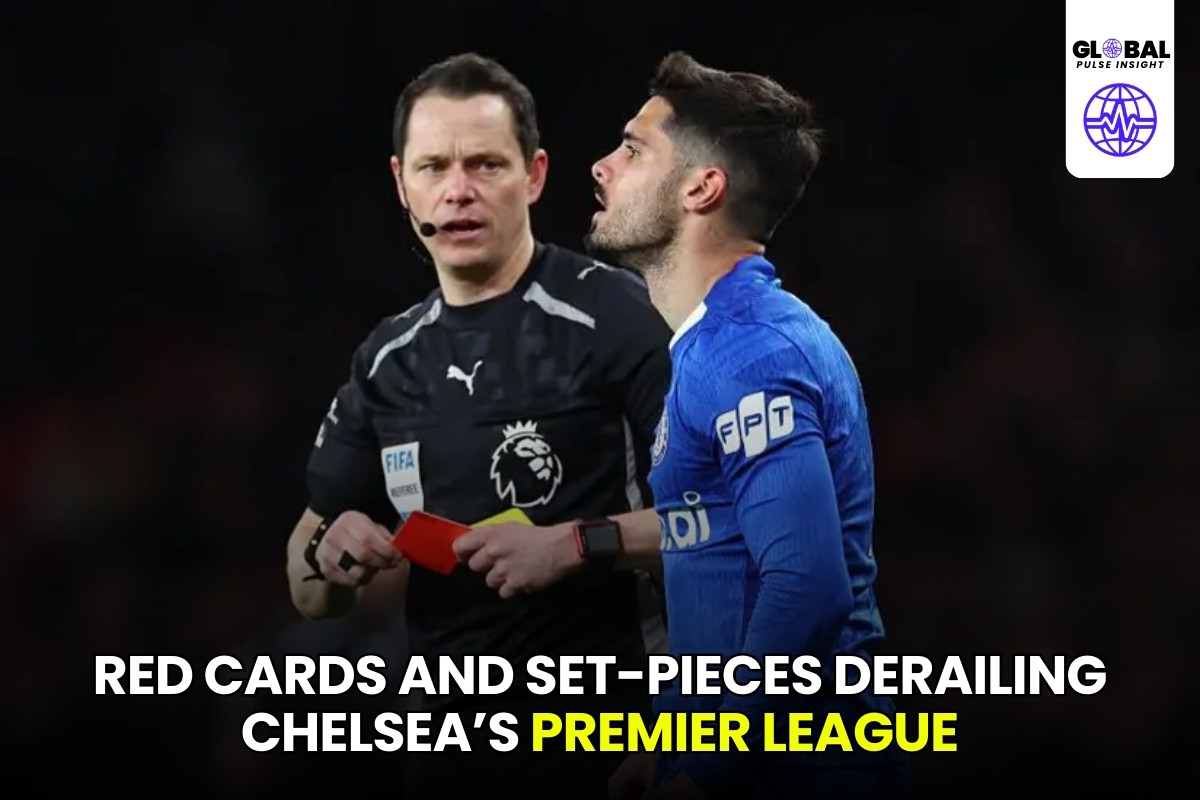
- Red Cards: Pedro Neto’s dismissal for a cynical foul on Arsenal’s Gabriel Martinelli marked Chelsea’s seventh Premier League red card this season-the most of any team in the division. With ten matches remaining, the Blues are close to equalling the all-time league record.
- Set-Piece Conceding: Arsenal’s Jurrien Timber scored the winning goal from a set-piece, continuing a troubling pattern. Chelsea have conceded ten set-piece goals in 13 matches since Rosenior’s appointment in January. Only West Ham have conceded more in the league this season.
- Mixed Positives: Despite falling behind early, Chelsea forced a Piero Hincapie own goal via Reece James’s delivery to level the score before halftime. However, these positives are overshadowed by recurring vulnerabilities that cost them points.
Rosenior acknowledged the issues, stating, “If we don’t eradicate the set-play issues and our discipline problems, then for all of the good things we do, we won’t get the results we want.”
Chelsea’s Disciplinary Challenges
Chelsea’s discipline this season has been a major concern:
- Seven Premier League red cards-the highest in the league
- Nine dismissals across all competitions
- Close to matching Sunderland’s record of eight different players sent off in a single season
- Persistent lapses despite attempts to tighten discipline under Rosenior
Experts attribute some of these issues to the squad’s youth. Former England defender Matthew Upson explained, “It’s cultural. You build it into the club, players buy into it and police themselves. Young players are more susceptible to these situations.”
Reece James, one of the team’s leaders, emphasized that the red cards come from different players each time, making internal review and improvement essential. Playing 11 v 10 at the highest level, he said, “is tough; 11 v 10 is even harder, no matter who you are playing.”
Set-Piece Vulnerabilities
Chelsea’s defensive problems are not limited to red cards. Set-piece goals have become a recurring theme:
- Chelsea have conceded 14.05 expected goals (xG) from set pieces this season-the highest in the Premier League
- Since Rosenior took charge, the team has allowed 10 set-piece goals in just 13 matches
- Five of those came against Arsenal, including the Carabao Cup semi-finals, which Chelsea lost 4-2 on aggregate
The club has tried to address these issues through focused training sessions. Rosenior said, “We worked on set-plays all week. Conceding despite preparation is even more difficult to swallow.”
The inability to defend dead-ball situations highlights a structural weakness, compounded by the lack of natural leaders to organize and motivate the young squad during critical moments.
Regional and Global Implications
Chelsea’s issues resonate beyond Stamford Bridge:
- Premier League Competition: Defensive lapses and disciplinary problems can cost points in one of the most competitive leagues in the world, affecting Champions League qualification and financial stability.
- Player Development: Young players exposed to repeated red cards and high-pressure failures may struggle to develop consistent professionalism.
- Managerial Impact: Rosenior faces scrutiny over his ability to instill discipline and tactical rigor, with early signs suggesting more work is needed.
- Global Audience: Chelsea’s brand and fanbase worldwide observe these performances, which could influence sponsorships, merchandising, and international reputation.
Analysis: Why This Keeps Happening
Chelsea’s recurring red cards and set-piece goals are a combination of cultural and tactical issues:
- Youthful Squad: A young team with limited on-field leadership often struggles to maintain composure under pressure.
- Cultural Norms: Lack of an ingrained culture of discipline and accountability exacerbates mistakes.
- Tactical Deficiencies: Defensive systems have not adapted to prevent set-piece vulnerabilities, even after focused training sessions.
- Psychological Factors: Consecutive high-stakes games and pressure situations can increase errors, particularly when the squad lacks experienced leaders to guide them.
To reverse these trends, Chelsea must integrate leadership, tactical discipline, and mental resilience training, alongside addressing structural defensive weaknesses.
Data and Statistics
- Premier League red cards this season: 7 (Chelsea highest)
- Set-piece goals conceded since Rosenior’s appointment: 10 in 13 matches
- Chelsea fair-play ranking: bottom of the Premier League table
- Expected goals conceded from set-pieces: 14.05 (highest in the league)
These numbers underline how Chelsea’s problems are systemic and require a multi-faceted solution.
Practical Insights: What Fans and Analysts Should Know
- For Fans: Understanding the root causes of Chelsea’s defensive and disciplinary issues helps temper expectations and provides insight into tactical decisions.
- For Analysts: Chelsea’s ongoing challenges are case studies in the impact of team culture and youth on results in high-level football.
- For Managers and Coaches: The situation emphasizes the importance of leadership, discipline, and specialized set-piece preparation.
FAQs
1. Why is Chelsea conceding so many set-piece goals?
Chelsea have struggled with tactical organization and concentration during dead-ball situations, compounded by a young squad with limited leaders.
2. How many red cards has Chelsea received this season?
Chelsea have received seven red cards in the Premier League and nine across all competitions, the most of any club in the league.
3. Who is responsible for improving Chelsea’s discipline?
Manager Liam Rosenior, along with team leaders like Reece James, is tasked with instilling better discipline and focus among the players.
4. Are Chelsea’s problems new?
No, Chelsea have had recurring disciplinary and set-piece issues under previous managers including Pochettino and Maresca.
5. How does this affect Chelsea’s Premier League position?
Red cards and set-piece goals have cost points, leaving Chelsea sixth in the league and six points outside the top four, threatening Champions League qualification.
Conclusion
Chelsea’s season continues to be shaped by recurring red cards and set-piece vulnerabilities. While the team demonstrates moments of skill and resilience, systemic issues-cultural, tactical, and psychological-threaten their Premier League aspirations. Addressing these challenges requires a combination of discipline, leadership, and strategic defensive planning.
As the season progresses, how Rosenior handles these persistent problems could determine whether Chelsea regain their competitive edge or continue to fall short in critical matches.
Disclaimer
This article provides analytical commentary based on publicly available information and does not represent official statements from Chelsea FC or the Premier League.