
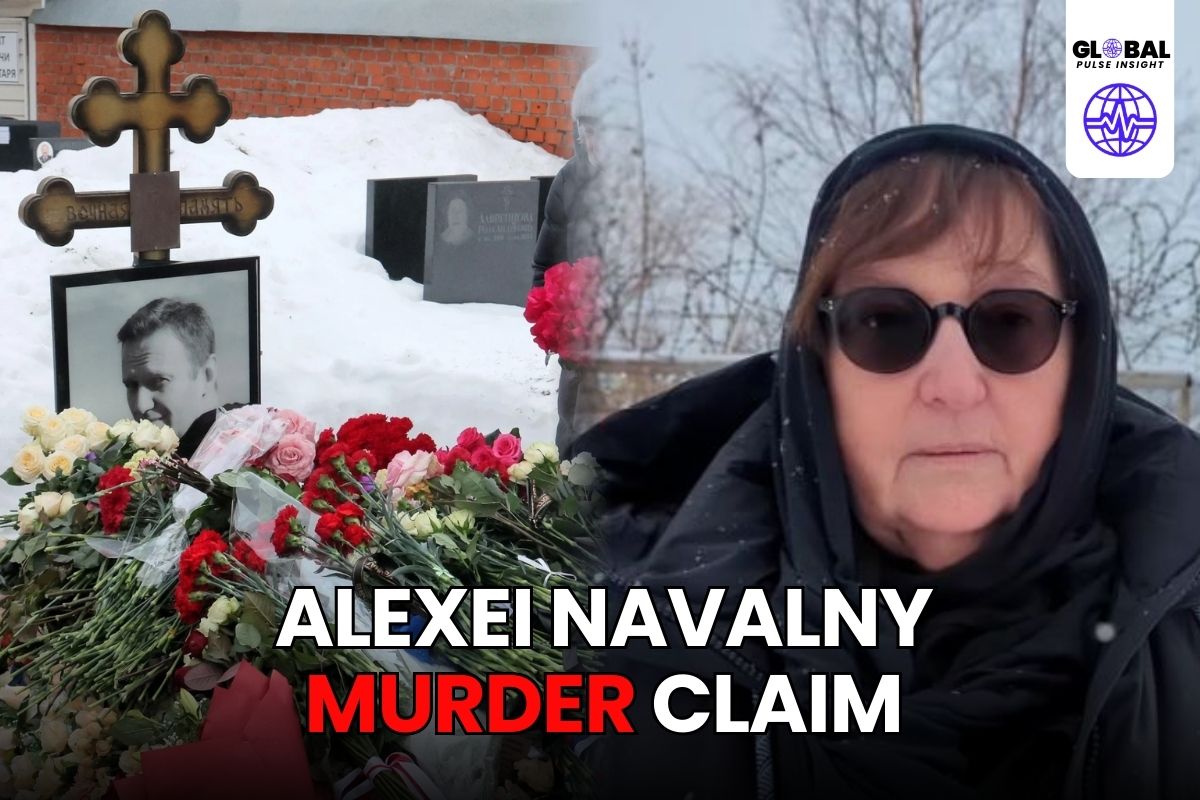
The death of Russian opposition leader Alexei Navalny continues to reverberate around the world, with new findings and strong statements from his family and international observers. Recently, Navalny’s mother said her son was murdered after poison evidence emerged, deepening the controversy surrounding his death in custody and renewing calls for justice and clarity.
This blog post explores the latest developments, what the poison finding means, and why this matter remains significant globally.
Introduction
Alexei Navalny, the most prominent critic of Russian President Vladimir Putin, died in a Siberian prison colony in February 2024 while serving a long sentence on charges widely seen abroad as politically motivated. After years of speculation and international concern, new poison findings have emerged, prompting Navalny’s mother to declare that her son was murdered – not merely a prisoner who died while serving time.
This claim has ignited fresh global discussion, raised questions about accountability, and triggered reactions from governments and human rights organizations. In this article, we unpack what happened, what the evidence suggests, and why the world is watching closely.
What Happened to Alexei Navalny?
Alexei Navalny was a leading Russian opposition figure who challenged corruption and authoritarianism in Russia. His imprisonment stemmed from convictions that many Western governments and rights groups view as politically driven. On 16 February 2024, Navalny died in the Arctic penal colony known as “Polar Wolf,” at the age of 47. The Russian authorities initially attributed his death to natural causes, citing medical issues.
However, the lack of transparent information surrounding his death fueled international concern and skepticism.
New European Poison Findings
Nearly two years after his death, five European countries – the United Kingdom, France, Germany, Sweden, and the Netherlands – issued a joint statement saying laboratory analysis of biological samples indicated Navalny was poisoned with epibatidine, a rare toxin found in certain poison dart frogs.
Key points about this finding include:
- The toxin epibatidine is not naturally occurring in Russia.
- The substance was identified through European lab testing.
- Governments allege the presence of this toxin points to deliberate poisoning.
The European statement has been shared with the Organization for the Prohibition of Chemical Weapons (OPCW) due to its implications.
Navalny’s Mother Speaks Out
At a memorial service marking the second anniversary of her son’s death, Navalny’s mother, Lyudmila Navalnaya, said that the poison findings confirmed what she always believed: that her son was murdered, not simply a victim of prison conditions.
Her main points included:
- A strong belief that Navalny’s death was not natural.
- Calls for transparent investigations and accountability.
- A desire for justice within Russia and internationally.
Her statement reflects not only grief, but also insistence on uncovering the truth behind her son’s tragic end.
Russian Government’s Response
The Kremlin and Russian officials have firmly rejected the European poison allegations, calling them politically motivated and baseless. They maintain that Navalny died of natural causes and deny involvement in any poisoning.
Key responses include:
- Denial of any poison use attributed to Russian authorities.
- Claims that accusations are part of a political narrative orchestrated by foreign governments.
- Ongoing labeling of Navalny’s movement as “extremist,” with restrictions on mentioning his name within Russia.
This sharp contrast in narratives – between Western findings and Russian official positions – is a core element of ongoing debate.
Why This Matters Globally
The case of Alexei Navalny is not just about one man’s death – it represents broader themes of political dissent, human rights, international law, and state accountability. Here’s why this story matters:
Diplomatic Tensions
European nations’ allegations have reignited scrutiny of Russia’s human rights record and led to discussions about further sanctions.
Chemical Weapons Concerns
If confirmed, the use of a potent toxin may constitute a violation of the Chemical Weapons Convention, raising significant legal questions.
Public Trust and Transparency
The lack of transparent investigation and conflicting reports contribute to distrust in official explanations and highlight the challenges faced by families seeking answers.
Common Misconceptions
In a case as complex and politically charged as this, misconceptions can easily emerge. Let’s clear up a few:
- Misconception: Poisoning has been officially proven by Russian investigators.
Fact: European laboratories reported the toxin, but Russian officials have not acknowledged it. - Misconception: The poisoning claim is universally accepted internationally.
Fact: Some governments support the findings, but others have refrained from joining the joint statement. - Misconception: There is a finalized criminal verdict.
Fact: No international legal body has yet issued a formal judgment; investigations are ongoing.
What Happens Next?
While the European findings have added weight to Navalny’s family’s claims, actual legal and political outcomes remain uncertain. Possible future developments include:
- Further international legal scrutiny through organizations like the OPCW.
- Renewed diplomatic pressure and sanctions related to human rights violations.
- Continued advocacy from Navalny’s family and supporters for transparency and justice around his death.
Each of these speaks to the growing complexity of international relations involving Russia and other countries.
Conclusion
The story of Alexei Navalny’s death and the poisoning findings continues to generate international attention and controversy. With his mother publicly asserting that her son was murdered and European investigations pointing to poison exposure, the debate over what truly happened remains unresolved.
What is clear is that this event has profound implications for global diplomacy, human rights advocacy, and the pursuit of justice for political dissenters around the world.
FAQ: Common Questions About the Case
1. What did the poison finding reveal?
European laboratories reported traces of a rare toxin, epibatidine, suggesting Navalny may have been poisoned.
2. Why does Navalny’s mother say he was murdered?
She believes the new findings confirm that her son’s death was not natural but the result of poisoning.
3. Has Russia admitted to poisoning Navalny?
No – Russian authorities reject the poisoning claims and maintain that Navalny died of natural causes.
4. What substance was reported in the European analysis?
The toxin identified was epibatidine, a substance associated with certain poison dart frogs.
5. What could happen next legally?
The case could be reviewed by international bodies like the OPCW, and diplomatic pressure may continue.