
Introduction
The rapid evolution of artificial intelligence is transforming many industries, but it is also reshaping how information spreads during global crises. In recent weeks, a surge of AI-generated videos related to the escalating tensions between Iran, Israel, and the United States has raised serious concerns among digital security experts, media analysts, and policymakers.
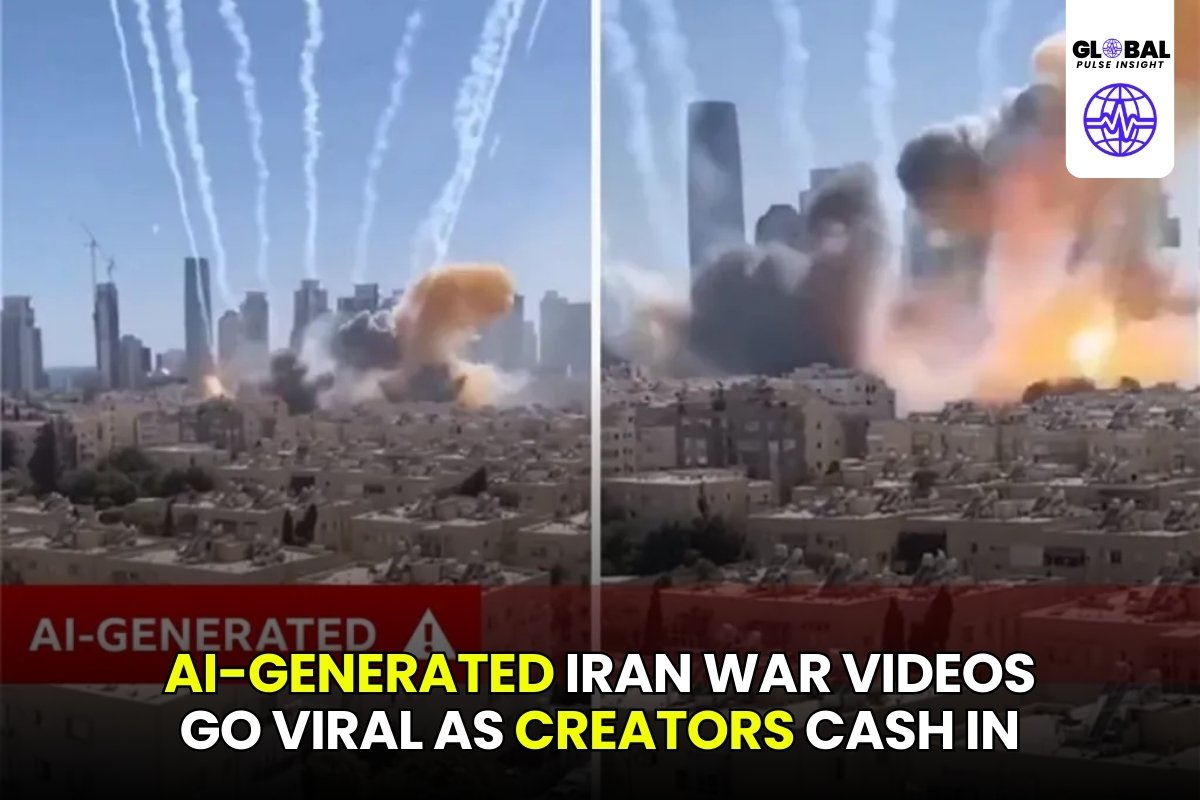
Across social media platforms, highly realistic yet fabricated videos depicting missile strikes, burning landmarks, and large-scale destruction have gained millions of views. Many of these videos are produced using advanced generative AI tools and are designed to appear like authentic footage from the battlefield. While some creators claim the content is meant for entertainment or speculation, others are reportedly monetizing these videos through engagement-based revenue programs.
The phenomenon highlights a growing challenge in the digital age: the intersection of artificial intelligence, misinformation, and profit incentives. As the technology becomes more accessible, the ability to create convincing synthetic media is no longer limited to professionals. Instead, individuals with basic technical skills can now generate realistic war footage in minutes.
This development raises important questions about trust, information security, and the future of journalism during international conflicts.
Historical Background
Misinformation during wartime is not a new phenomenon. Governments, political groups, and individuals have long used propaganda to influence public perception. During the Cold War, both Western and Soviet media outlets engaged in information campaigns designed to shape global narratives.
However, the rise of social media in the 21st century dramatically accelerated the spread of unverified information. Platforms such as Facebook, TikTok, and X (Twitter) enabled information to reach global audiences instantly, often without traditional editorial oversight.
The emergence of generative artificial intelligence tools marks a new phase in this evolution. Advanced models like OpenAI Sora and Google Veo can generate high-quality videos from simple text prompts. These tools were initially developed to support creative industries, filmmaking, and digital marketing. However, their capabilities also make them ideal for producing synthetic content that can be mistaken for real footage.
In earlier conflicts, misinformation typically relied on manipulated photographs or misleading captions. Today, AI can generate entirely fabricated scenes-complete with realistic lighting, motion, and sound effects-making it far more difficult for viewers to distinguish fact from fiction.
Key Developments
Recent weeks have seen an explosion of AI-generated videos portraying scenes from the ongoing tensions involving Iran and Israel. These clips often depict dramatic events such as missile strikes on urban areas, explosions in major cities, or attacks on strategic infrastructure.
In many cases, the footage spreads rapidly across social media before fact-checkers or journalists have the opportunity to verify its authenticity. Some posts accumulate millions of views within hours, especially when they appear during moments of heightened public anxiety about potential escalation.
A notable pattern among these videos is their monetization. Certain social media platforms reward creators whose posts generate large amounts of engagement-likes, shares, comments, and views. As a result, some users ntentionally produce sensational content designed to go viral.
According to digital media researchers, this engagement-driven model can inadvertently encourage misinformation. The more shocking or dramatic a video appears, the more likely it is to be shared, regardless of whether it is real.
In response to growing criticism, some platforms have begun introducing policies aimed at addressing the problem. For example, X (Twitter) has indicated that accounts sharing AI-generated conflict footage without proper labeling may face restrictions in monetization programs.
Despite these measures, experts argue that the scale of the challenge remains enormous. Detecting AI-generated content requires sophisticated verification tools and constant monitoring, while new generative technologies continue to evolve rapidly.
Regional and Global Implications
The spread of synthetic war footage has implications far beyond social media engagement. During periods of geopolitical tension, misinformation can influence public opinion, financial markets, and even diplomatic relations.
For residents in the Middle East, false reports of attacks or destruction can trigger panic and confusion. When AI-generated videos circulate alongside authentic footage, it becomes increasingly difficult for people to determine which information is trustworthy.
Internationally, misleading visuals can shape narratives about the conflict. Governments, analysts, and journalists rely on visual evidence to assess military developments. If fabricated videos are mistaken for real events, they may distort understanding of the situation on the ground.
There are also broader security concerns. In extreme cases, manipulated media could be used to escalate tensions between nations. For example, a fabricated video showing an attack on a major landmark could provoke public outrage or diplomatic backlash before authorities confirm its authenticity.
This phenomenon is sometimes referred to as the “synthetic media crisis,” where artificial intelligence blurs the boundary between real and fake information during sensitive global events.
Analysis: The Economics of Viral Misinformation
One of the most significant drivers behind AI-generated war videos is economic incentive. Many social media platforms operate on engagement-based revenue models, where creators receive payments when their content generates substantial interaction.
In such systems, sensational content often performs better than factual reporting. Dramatic visuals-explosions, military strikes, or chaotic scenes-naturally attract attention and encourage sharing.
Digital media researchers estimate that some monetization programs pay creators several dollars per million views. While this may appear modest, viral content can accumulate tens or even hundreds of millions of impressions.
As a result, AI-generated videos can effectively become a “content factory,” where creators produce multiple clips designed to attract engagement. Automated tools allow them to generate new scenarios quickly, creating a continuous stream of viral posts.
From a technological perspective, the barriers to entry have never been lower. Generative AI tools require minimal technical expertise, and many are available through user-friendly interfaces. A simple text
description-such as “missile strike on a city skyline at night”-can generate a convincing video within minutes.
Looking ahead, the challenge for social media companies will be balancing innovation with responsibility. Stronger verification systems, clearer labeling of synthetic media, and improved digital literacy among users may all play a role in addressing the issue.
Data, Technology, and Verification Challenges
Recent advancements in AI have dramatically increased the realism of synthetic content. Modern video generation models can simulate complex elements such as lighting reflections, motion blur, and environmental physics.
Researchers also note that AI-generated images and videos are becoming increasingly difficult to detect using traditional methods. While tools like watermark detection and forensic analysis exist, they are not always effective against rapidly evolving algorithms.
Another challenge is the sheer volume of content. Billions of posts are uploaded to social media platforms each day. Even with automated detection systems, identifying every instance of synthetic media remains a daunting task.
Organizations focused on digital integrity have called for greater collaboration between technology companies, academic researchers, and governments. Their goal is to develop standardized tools capable of identifying AI-generated media before it spreads widely.
Why Readers Should Care
The rise of AI-generated war content reflects a broader transformation in how information is produced and consumed. For everyday internet users, the ability to distinguish reliable sources from fabricated content is becoming increasingly important.
Misinformation can affect public perception, political debate, and even financial markets. In times of international conflict, inaccurate information may influence decisions made by governments, businesses, and individuals.
Moreover, the issue extends beyond the current tensions in the Middle East. As artificial intelligence continues to evolve, similar challenges could emerge during elections, natural disasters, or other major global events.
Understanding how AI-generated media works-and recognizing the incentives behind its creation-can help audiences approach viral content with greater skepticism and awareness.
Faqs
1. What are AI-generated war videos?
AI-generated war videos are synthetic clips created using artificial intelligence tools that simulate scenes of military conflict. These videos may depict missile strikes, explosions, or battlefield activity that never actually occurred, making them misleading when shared without proper labeling.
2. Why are AI-generated Iran war videos going viral online?
Many AI-generated videos spread quickly because they show dramatic and emotional scenes that attract attention on social media. Engagement-driven algorithms on platforms like TikTok and X (Twitter) often promote highly viewed or shared content, which helps these videos reach millions of users.
3. How are creators making money from AI-generated conflict videos?
Some social media platforms offer revenue-sharing programs where creators earn money based on views, likes, and engagement. Viral AI-generated content can generate millions of impressions, allowing creators to earn income through these monetization systems.
4. How can people identify AI-generated war footage?
Viewers can look for warning signs such as unrealistic movements, inconsistent lighting, or unusual details in buildings and landscapes. Verification from trusted news organizations and fact-checking groups is also important before sharing or believing viral conflict videos.
5. Why is AI misinformation during wars a serious concern?
AI-generated misinformation can create confusion, spread panic, and damage trust in legitimate news sources. During international conflicts, fake videos may also influence public opinion and complicate efforts to understand what is actually happening on the ground.
Conclusion
Artificial intelligence is reshaping the global information landscape in powerful ways. While generative AI tools offer enormous potential for creativity and innovation, they also introduce new risks when used irresponsibly.
The recent surge of AI-generated videos related to the Iran conflict demonstrates how quickly synthetic media can spread online. Driven by engagement-based monetization systems, some creators are producing dramatic but misleading content designed to attract views and revenue.
As governments, technology companies, and researchers grapple with this emerging challenge, one lesson is already clear: the battle for accurate information is becoming just as important as events on the battlefield itself.
Strengthening verification systems, improving digital literacy, and encouraging responsible platform policies will be essential steps in maintaining trust in the digital age.
Disclaimer:
This article provides analytical commentary based on publicly available information and does not represent official statements from any government or organization.