Introduction
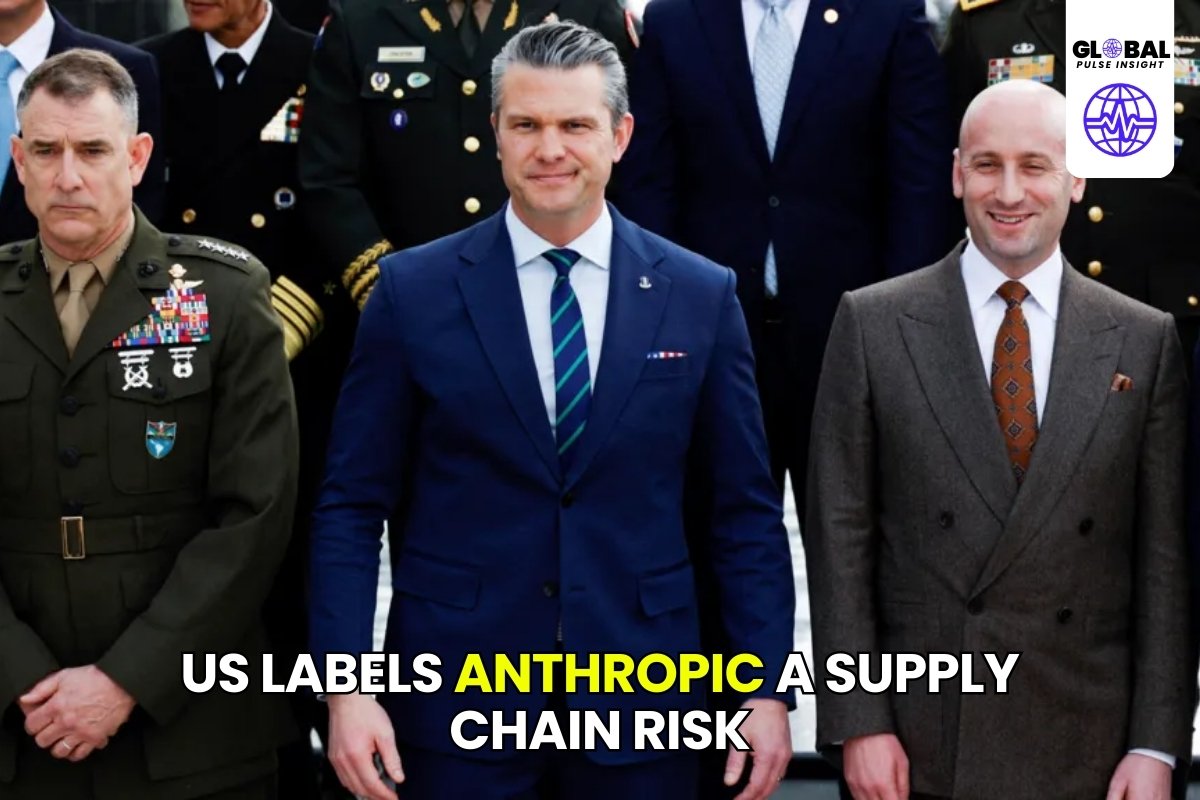
The relationship between governments and artificial intelligence companies is entering a new and complex phase. A recent decision by the United States Department of Defense to classify the AI firm Anthropic as a “supply chain risk” has sparked a major dispute that could reshape how technology companies collaborate with national security institutions. The move is particularly notable because it marks the first time a U.S. company has received such a designation from the Pentagon.
Anthropic, known for developing the AI assistant Claude, has strongly rejected the decision and signaled that it will challenge the designation in court. The company’s leadership argues that the move is legally questionable and could undermine innovation in the U.S. technology sector.
This conflict reflects a broader debate over the role of artificial intelligence in military operations, government oversight of private technology firms, and the growing competition between major AI developers such as OpenAI, Google, and Microsoft. As AI becomes increasingly central to national security and economic power, disputes like this one are likely to become more common.
Historical Background
The integration of advanced technologies into military and intelligence operations has been accelerating over the past decade. Artificial intelligence, in particular, has emerged as a strategic capability for governments seeking advantages in areas such as data analysis, cybersecurity, surveillance, and autonomous systems.
The United States has invested heavily in AI research through both government agencies and private partnerships. According to estimates from the National Security Commission on Artificial Intelligence, the U.S. government spends billions of dollars annually on AI-related programs. Many of these initiatives involve collaboration with private companies developing cutting-edge algorithms and machine learning systems.
Anthropic was founded in 2021 by former researchers from OpenAI, including chief executive Dario Amodei. The company positioned itself as a leader in “AI safety,” emphasizing the importance of designing systems that behave responsibly and avoid harmful outcomes. Its flagship AI model, Claude, quickly gained attention as a competitor to popular systems like ChatGPT.
Initially, Anthropic maintained working relationships with various U.S. government agencies. In fact, its tools were reportedly among the first advanced AI systems deployed in certain classified environments. However, tensions gradually emerged as the company expressed reservations about providing unrestricted access to its technology for military purposes.
These disagreements set the stage for the current confrontation between Anthropic and the U.S. defense establishment.
Key Developments
The controversy intensified when the Pentagon officially classified Anthropic as a supply chain risk. Such a designation indicates that the government believes a vendor may pose potential security or reliability concerns for defense operations.
Once labeled as a supply chain risk, a company can face restrictions on its ability to work with military contractors or participate in defense-related projects. In Anthropic’s case, the decision effectively prevents companies involved in military contracts from engaging in certain commercial activities with the AI developer.
Anthropic leadership responded quickly. CEO Dario Amodei stated that the company believes the designation lacks a solid legal foundation and violates principles governing federal procurement policies. He argued that the law requires the government to use the least restrictive measures possible when addressing supply chain concerns.
The dispute appears to stem largely from disagreements over how the military should be allowed to use artificial intelligence systems. Anthropic reportedly refused to provide unrestricted access to its tools for defense applications, citing concerns that such capabilities could be used for mass surveillance or autonomous weapons development.
Meanwhile, other technology companies have continued collaborating with the U.S. military. Microsoft, for example, has indicated that it will still incorporate Anthropic technology into certain commercial products while excluding projects connected to defense agencies.
At the same time, competitors are moving to fill the gap. OpenAI, led by CEO Sam Altman, has secured new defense-related agreements that include specific safeguards for classified AI deployments.
The legal challenge that Anthropic plans to file could become one of the most significant cases yet involving government regulation of artificial intelligence companies.
Regional and Global Implications
Although the dispute is primarily a domestic issue within the United States, its implications extend far beyond the country’s borders. Artificial intelligence has become a critical element of global technological competition, particularly between the United States and countries such as China.
The U.S. government views AI as a strategic technology that could influence military capabilities, economic leadership, and geopolitical influence in the coming decades. Consequently, policymakers are increasingly focused on ensuring that AI systems used in defense operations meet strict security requirements.
At the same time, excessive restrictions on private companies could discourage innovation or push technology development toward less regulated environments. If firms believe they may face unpredictable regulatory actions, they may become more cautious about collaborating with government agencies.
Another global implication concerns the balance between technological ethics and national security. Many technology companies, including Anthropic, have emphasized responsible AI development and the need to prevent misuse of powerful algorithms. However, governments often argue that advanced tools are necessary to address emerging security threats.
The debate reflects a broader tension between ethical technology governance and the realities of geopolitical competition.
Analysis: What Happens Next?
The confrontation between Anthropic and the Pentagon is likely to have long-lasting consequences for both the AI industry and government procurement practices.
First, the legal battle could clarify how far the U.S. government can go when labeling private companies as security risks. If the courts determine that the Pentagon exceeded its authority, it could limit similar designations in the future. On the other hand, if the government’s decision is upheld, defense agencies may gain greater flexibility in excluding companies from sensitive projects.
Second, the dispute may accelerate competition among AI companies seeking defense contracts. Firms that are willing to cooperate closely with government agencies could gain access to lucrative opportunities in national security programs.
Third, the case may influence how AI companies design policies around military use. Some organizations may adopt clearer guidelines defining what applications of their technology are acceptable and which ones they will refuse.
Looking ahead, governments around the world are likely to develop more formal frameworks governing AI partnerships with the private sector. As artificial intelligence becomes essential for cybersecurity, intelligence analysis, and military planning, these relationships will become increasingly complex.
Data, Statistics, and Industry Context
The artificial intelligence industry has expanded rapidly in recent years. According to estimates from McKinsey & Company, AI could contribute up to $13 trillion to the global economy by 2030.
In the United States alone, federal spending on AI-related research and development has grown significantly. Reports suggest that U.S. government agencies collectively allocate billions of dollars annually to AI initiatives across defense, intelligence, healthcare, and infrastructure sectors.
Meanwhile, private investment in AI startups has surged. Venture capital funding for AI companies exceeded $50 billion globally in recent years, highlighting the technology’s growing importance in the global economy.
Anthropic itself has received billions in investment from major technology partners, including Amazon and Google, reflecting strong confidence in the company’s long-term potential.
Practical Insights: Why This Matters
For many readers, a dispute between a technology company and the Pentagon might seem like a distant policy issue. However, the outcome of this case could shape the future of artificial intelligence development.
If governments gain broad authority to restrict AI vendors, technology firms may face greater regulatory uncertainty. Conversely, if companies maintain stronger control over how their technology is used, it could influence the ethical boundaries of AI deployment.
The debate also highlights the growing importance of AI governance. As machine learning systems become integrated into everyday life-from healthcare and finance to national defense-societies must determine how these technologies should be regulated and who ultimately controls them.
In that sense, the Anthropic case represents a larger conversation about the balance between innovation, security, and ethical responsibility.
Faqs
1. Why did the US label Anthropic as a supply chain risk?
The United States Department of Defense labeled Anthropic a supply chain risk due to concerns that the company’s artificial intelligence tools may not meet the security requirements needed for military and defense operations.
2. What is Anthropic and what does it do?
Anthropic is an artificial intelligence company that develops advanced AI models and applications. Its most well-known product is Claude, a conversational AI assistant designed for research, writing, and enterprise tasks.
3. Why is Anthropic challenging the Pentagon’s decision?
Anthropic believes the designation is legally questionable and may unfairly restrict its business operations. The company plans to challenge the decision in court to protect its reputation and ability to work with partners.
4. How could this dispute affect the AI industry?
The case could set an important precedent for how governments regulate AI companies. It may influence how technology firms collaborate with defense agencies and how security risks in the AI supply chain are defined.
5. What could happen next in the Anthropic vs Pentagon dispute?
The conflict may lead to a major legal battle that clarifies the limits of government authority over private technology companies. The outcome could shape future partnerships between AI developers and national security institutions.
Conclusion
The Pentagon’s decision to classify Anthropic as a supply chain risk has triggered a significant confrontation between the U.S. government and one of the world’s emerging AI leaders. At its core, the dispute reflects deeper questions about the relationship between technological innovation and national security.
Anthropic’s planned legal challenge may establish important precedents regarding government oversight of artificial intelligence companies. The outcome could influence how AI developers collaborate with defense agencies, how procurement policies are implemented, and how ethical concerns are addressed in the deployment of powerful technologies.
As artificial intelligence continues to reshape global economies and geopolitical competition, conflicts like this one are likely to become more frequent. The challenge for policymakers and technology leaders alike will be finding a balance that promotes innovation while safeguarding national interests.
Disclaimer:
This article provides analytical commentary based on publicly available information and does not represent official statements from any government or organization.